
Written by:
Devansh Tripathi
Published in:
October 12, 2025
Read Time:
14 minutes
Categories:
Customer Success
Top 10 alternatives to Vitally in 2026

Vitally built its reputation as the go-to CS platform for product-led growth companies. But as PLG teams scale from startup to mid-market, the limitations become clear. Most CS platforms—Vitally included—show you what customers are doing in your product. The best CS teams need platforms that understand why customers behave the way they do and what it means for revenue.
That requires more than product usage dashboards. It requires AI that connects the dots: detecting expansion signals across product usage AND conversations, flagging competitor mentions in support tickets, auto-enriching CRMs from customer interactions, and predicting churn using more than just login frequency.
Vitally offers plug-and-play setup with strong product analytics and custom objects—perfect for early-stage PLG companies. The two-week trial and startup-friendly pricing make it accessible. But this focus comes with tradeoffs: single account owners (dealbreaker for enterprises), technical complexity despite the "easy" promise, expensive AI features with limited outcomes, and integration gaps that force manual workarounds.
Why teams choose Vitally
PLG-First Design: Built specifically for product-led growth models
Product Usage Tracking: Deep visibility into feature adoption and engagement
Custom Objects: Flexible data models for unique business requirements
Quick Setup: Productive in 2-4 weeks vs. enterprise platforms
In-App NPS: Built-in surveys triggered by product behavior
Startup-Friendly Pricing: Accessible for early-stage companies
Why teams outgrow Vitally
Single Account Owner Limitation: Dealbreaker for enterprise accounts with multiple stakeholders
Technical Despite Simplicity Claims: Setting up custom objects requires more technical skill than expected
Expensive AI Features: High cost for limited outcomes compared to competitors
Integration Gaps: Missing bi-directional sync for core platforms forces manual work
Product Usage Tunnel Vision: Only shows what customers do, not why or what it means
Enterprise Limitations: Doesn't scale for complex org structures or governance needs
Platform Comparison: What Sets HQ1 Apart
Capability | HQ1 | Vitally | Planhat | Gainsight | Pylon | ChurnZero |
|---|---|---|---|---|---|---|
AI That Acts (not just reports) | ✅ Auto-acts on data | ❌ Manual interpretation | ❌ Manual workflows | ❌ Manual workflows | ❌ Basic AI | ❌ Manual workflows |
Beyond Product Usage | ✅ Conversations + usage + sentiment | Product usage focused | ✅ Multi-source | ✅ Multi-source | Conversations only | ✅ Multi-source |
Automatic CRM Enrichment | ✅ From all interactions | ❌ Manual entry | ❌ Manual entry | Partial | ❌ Manual entry | ❌ Manual entry |
Multiple Account Owners | ✅ | ❌ Single only | ✅ | ✅ | ✅ | ✅ |
Implementation Time | 4-10 days | 2-4 weeks | 8-16 weeks | 3-6 months | 1-3 weeks | 3 months |
Technical Setup Required | ❌ | ✅ Despite claims | ✅ Heavy | ✅ Heavy | ❌ | Moderate |
Enterprise Ready | ✅ | ❌ | ✅ | ✅ | ❌ | Partial |
Best For | PLG + revenue intelligence | Early-stage PLG only | Ops-heavy teams | Large enterprises | Slack-native support | Mid-market automation |
1. HQ1
HQ1 delivers what Vitally promises but goes beyond product usage to understand the complete customer story. While Vitally shows feature adoption metrics, HQ1's AI combines product usage with conversation analysis, sentiment detection, and competitor mentions to deliver actionable revenue intelligence. Best for PLG teams scaling beyond product analytics into revenue-driven CS.
What Makes HQ1 Unique
Beyond Product Usage: AI analyzes product adoption AND conversations, support tickets, emails to understand why customers behave the way they do—not just what they're doing.
Automatic Intelligence: Detects expansion signals across all touchpoints, flags competitor mentions, predicts churn using usage + sentiment, enriches CRM automatically from every interaction.
Enterprise-Ready from Day One: Multiple account owners, complex hierarchies, governance—everything Vitally lacks.
Pre-Built Intelligence: Works in 4-10 days vs. Vitally's technical setup for custom objects and workflows.
How it Compares to Vitally
Vitally shows what customers do in your product; HQ1's AI understands why they're doing it and what it means for revenue. Vitally requires manual interpretation of usage patterns; HQ1 automatically detects expansion signals, churn risks, and competitor threats across product usage AND all other interactions. Vitally stops at product analytics; HQ1 connects product behavior to revenue outcomes.
Drawbacks
Newer platform means smaller community than Vitally's established PLG user base
AI effectiveness depends on clean data across multiple sources
Pricing customized vs. transparent tiers
Best Suited For
PLG companies scaling from startup to mid-market who need intelligence beyond product usage and can't accept Vitally's enterprise limitations.
Pricing
Available on request
Implementation Time
4-10 days
2. Planhat
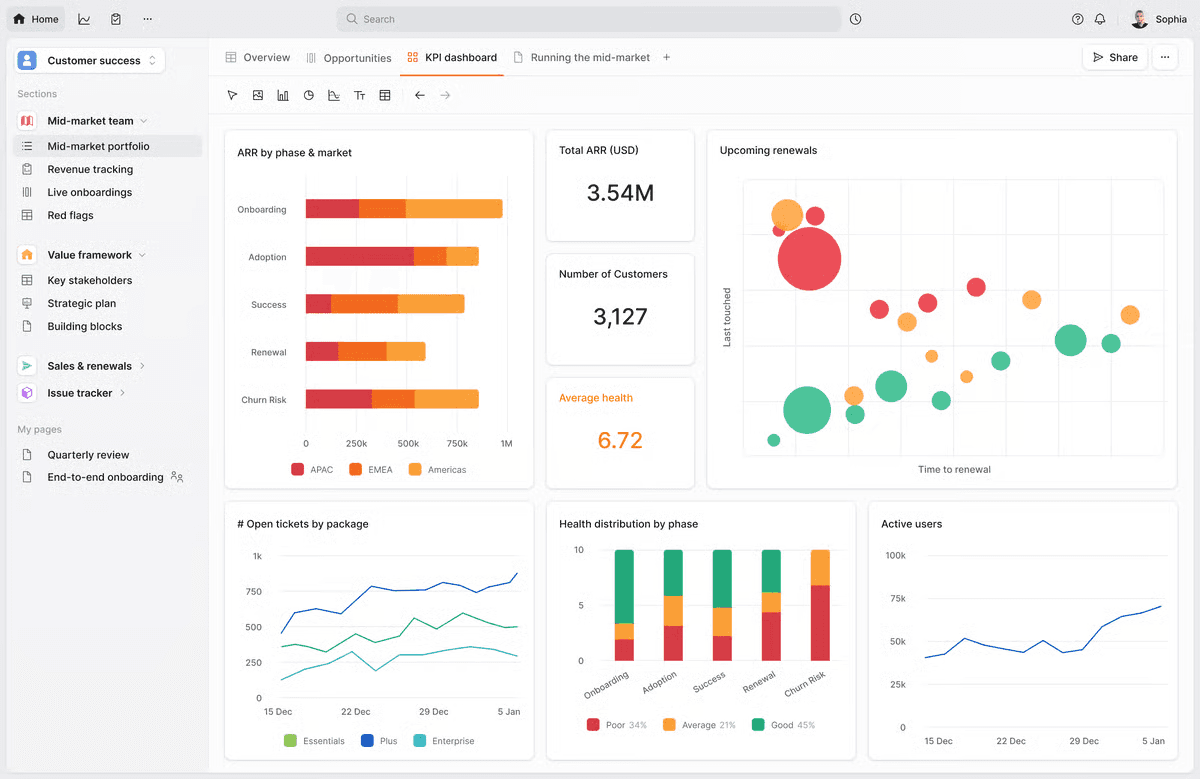
Planhat offers the enterprise-grade platform PLG companies eventually need when they outgrow Vitally. Where Vitally specializes in product usage, Planhat consolidates product, revenue, engagement, and support data into one customizable system. Best for PLG companies with dedicated CS Ops resources ready for enterprise functionality.
What Makes Planhat Unique
Beautiful + Powerful: Sleek UI that doesn't sacrifice enterprise functionality—rare in CS platforms.
No Per-Seat Pricing: Predictable costs as your CS team scales beyond Vitally's model.
Deep Customization: Tailor everything to your exact process vs. Vitally's more rigid structure.
Unified Intelligence: Product usage + revenue + engagement in sophisticated health models.
How it Compares to HQ1
Planhat offers deep customization but requires CS Ops expertise to configure. HQ1 delivers intelligence out of the box with pre-built AI agents. Planhat gives you tools to analyze data; HQ1's AI automatically acts on it. Choose Planhat if you have ops resources and love customization; choose HQ1 for intelligence without the burden.
Drawbacks

8-16 week implementation vs. Vitally's quick setup
$60k-$180k pricing significantly higher than Vitally
Requires dedicated CS Ops team to extract value
Performance issues with large datasets
Best Suited For
PLG companies graduating to mid-market/enterprise with CS Ops teams ready for deep customization and comprehensive data consolidation.
Pricing
$60k–$180k/year
Implementation Time
8-16 weeks
3. Gainsight
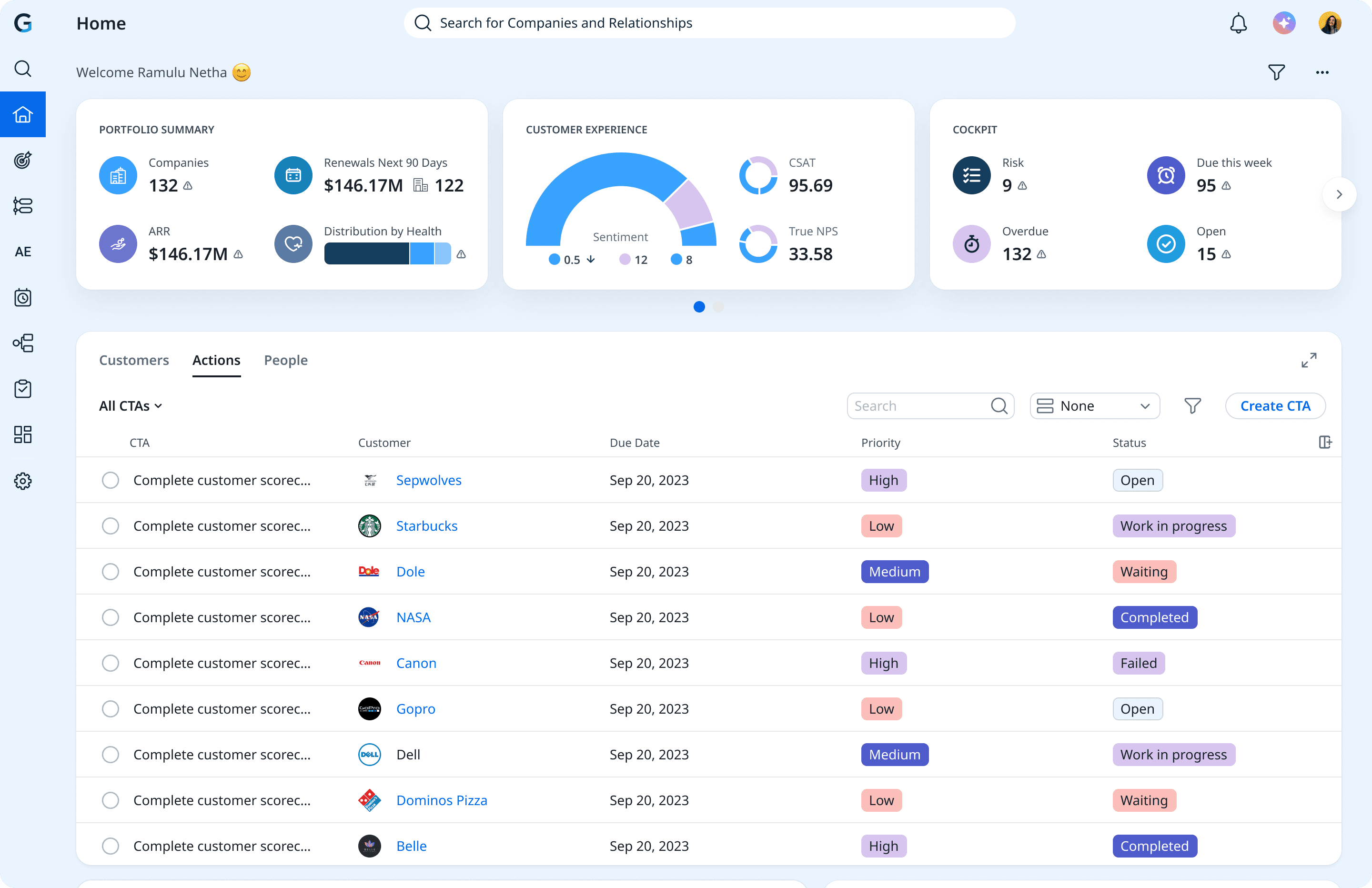
Gainsight is where enterprise PLG companies go when they've completely outgrown Vitally's limitations. Where Vitally works for startups with simple structures, Gainsight handles thousands of accounts with complex hierarchies and governance. Best for PLG unicorns needing enterprise scale and control.
What Makes Gainsight Unique
Enterprise Everything: Multi-layered approvals, governance, role-based permissions, complex account structures Vitally can't handle.
Journey Orchestrator: Complex customer journeys with branching logic across multiple products.
Massive Community: Years of best practices, templates, peer support.
Comprehensive Reporting: SQL-level power over all CS data.
How it Compares to HQ1
Gainsight offers maximum control at enterprise scale but requires 3-6 months and multiple CS Ops people. HQ1 delivers enterprise intelligence in 4-10 days with AI that works immediately. Choose Gainsight for governance at massive scale; choose HQ1 for intelligence without operational burden.
Drawbacks
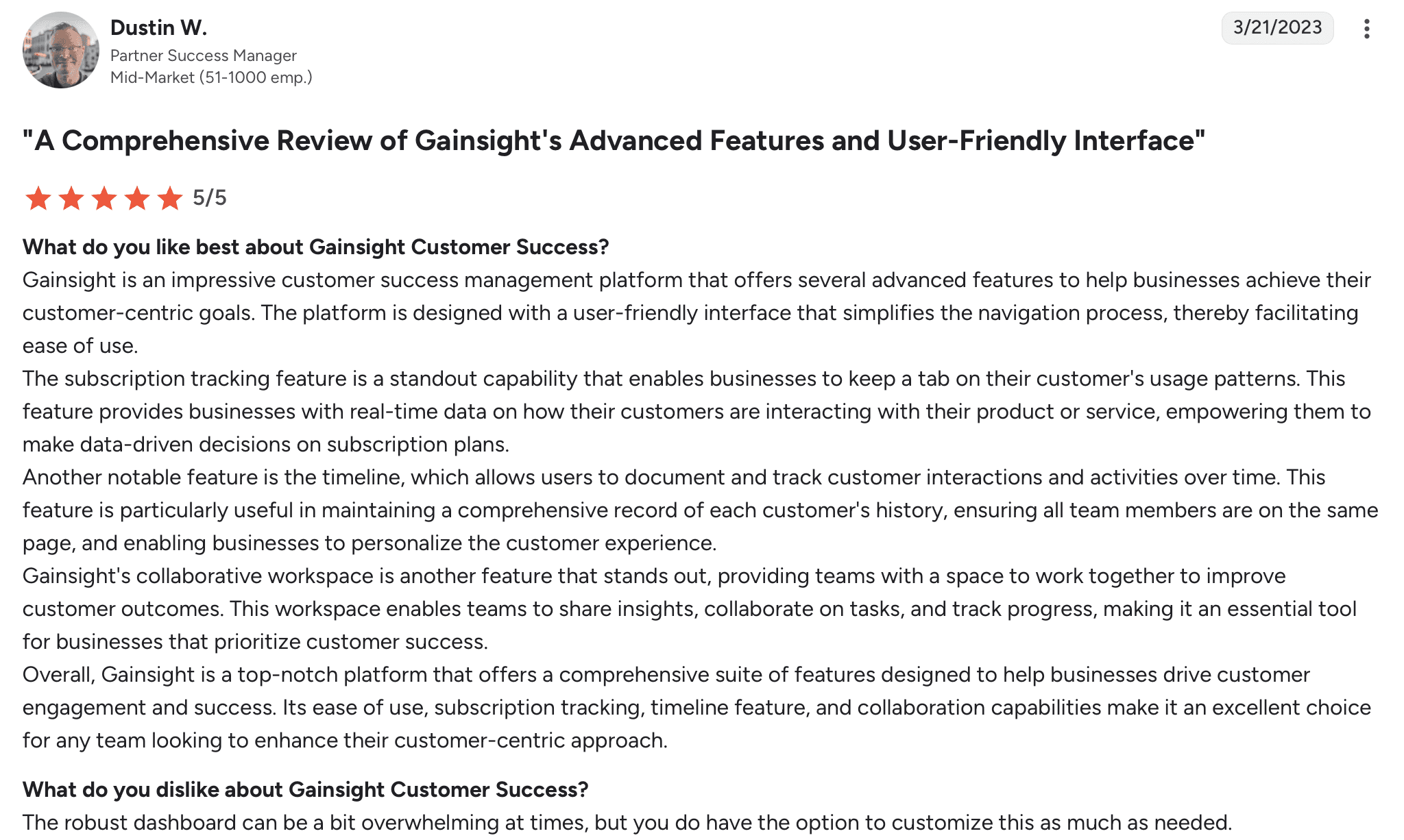
$100k+ annually—massive jump from Vitally pricing
Requires multiple dedicated CS Ops resources
3-6 month implementation feels endless after Vitally's speed
Performance can be painfully slow with complex reports
Best Suited For
Large PLG enterprises (think Atlassian, Slack scale) with 100+ CSMs managing thousands of accounts across complex segments.
Pricing
$100k+/year
Implementation Time
3-6 months minimum
4. Pylon

Pylon takes the opposite approach from Vitally—instead of product usage, it focuses on conversation management through Slack. Where Vitally is product-centric, Pylon is communication-centric. Best for PLG companies where support and CS live primarily in Slack.
What Makes Pylon Unique
Slack-Native Everything: All customer communication happens in Slack—no tool switching.
Fast-Moving Team: Ships features rapidly, similar to Vitally's agility.
Modern UI: Clean interface easy for non-technical teams.
Quick Setup: 1-3 weeks to productivity, even faster than Vitally.
How it Compares to HQ1
Pylon manages Slack conversations; HQ1 understands conversations AND product usage AND sentiment to deliver revenue intelligence. Pylon helps you respond faster; HQ1 tells you what actions to take for retention and expansion. Pylon is for support-driven teams; HQ1 is for revenue-driven teams.
Drawbacks
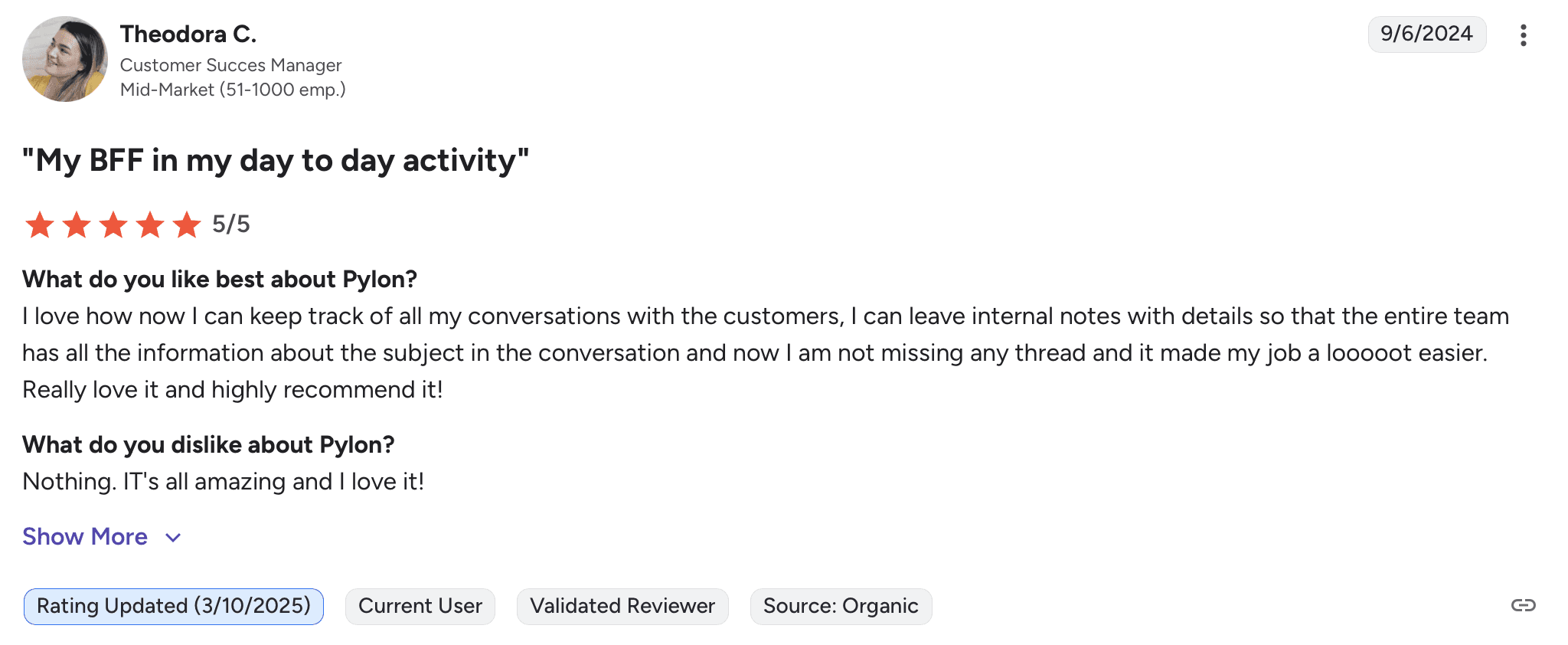
Support-first foundation—CS features feel secondary
Weak customer intelligence compared to Vitally's product analytics
Limited product usage tracking
Pricing model changes frequently
Best Suited For
Small to mid-market PLG teams with Slack-centric workflows who prioritize conversation management over product analytics.
Pricing
~$100/seat/month + AI add-ons
Implementation Time
1-3 weeks
5. ChurnZero
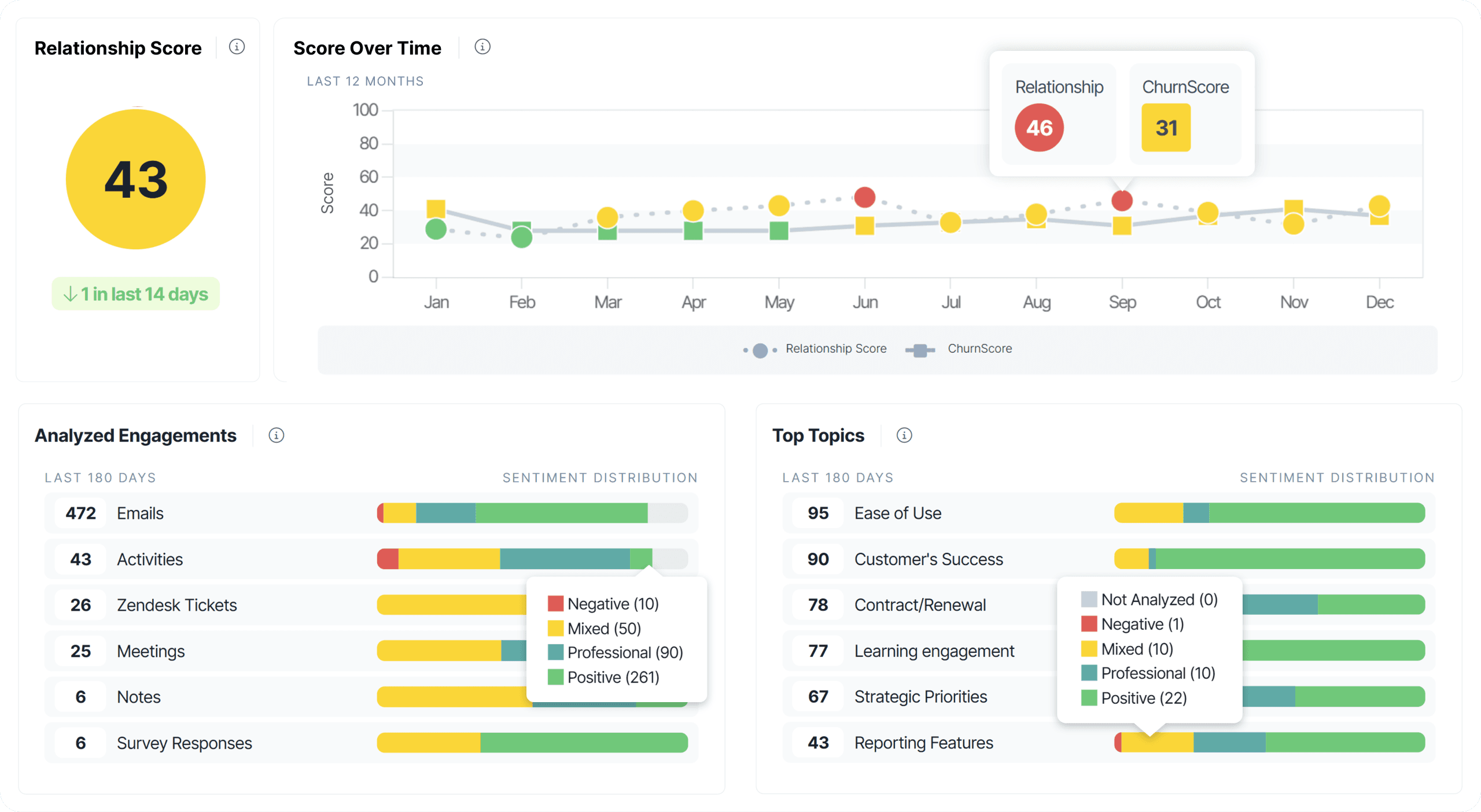
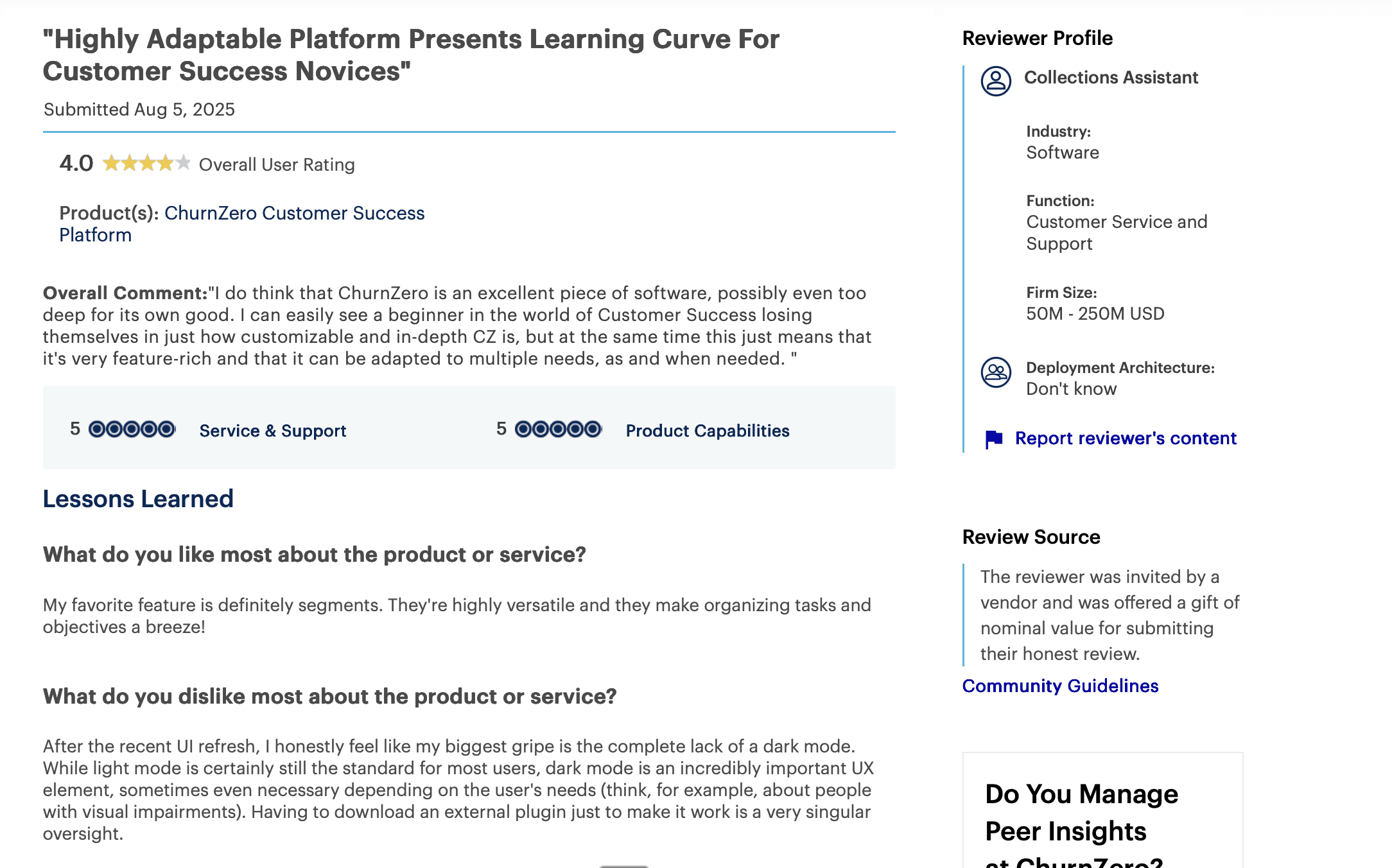
ChurnZero offers the automation Vitally lacks without requiring the technical setup. Where Vitally gives you product data but limited automation, ChurnZero excels at proactive engagement workflows. Best for PLG companies wanting to automate customer journeys as they scale.
What Makes ChurnZero Unique
Best-in-Class Playbooks: Most intuitive automation builder—create complex journeys without technical skills.
Real-Time Alerts: Immediate notifications on usage drops or engagement changes.
In-App Engagement: Deliver messages inside your product like Vitally's NPS but more comprehensive.
Exceptional Support: Implementation team treats setup as partnership.
How it Compares to HQ1
ChurnZero has excellent playbook automation but requires manual configuration. HQ1's AI proactively identifies opportunities without building rules—learns from data and adapts. ChurnZero automates what you know; HQ1 tells you what you should do based on signals you'd miss.
Drawbacks
Plays and Journeys fragmented into separate features
Product usage tracking not as deep as Vitally's
Multi-clause reporting complex
Pricing escalates as you add modules
Best Suited For
Mid-market PLG teams with clear customer journeys wanting powerful automation without Vitally's technical complexity or Gainsight's overhead.
Pricing
$28k–$75k/year
Implementation Time
3 months
6. Custify
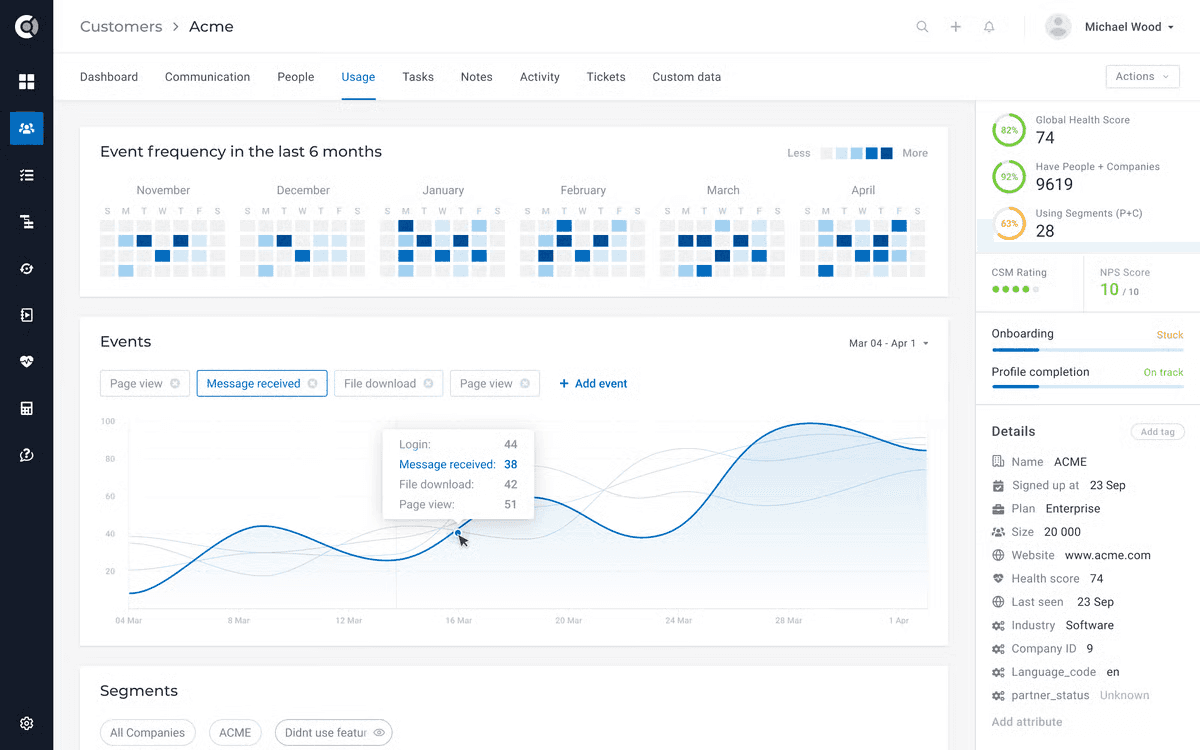
Custify offers more customization than Vitally at similar pricing without the single account owner limitation. Where Vitally's flexibility comes through custom objects, Custify's comes through configurable health scores and warehouse integrations. Best for PLG teams needing more flexibility than Vitally without enterprise complexity.
What Makes Custify Unique
Warehouse Integrations: Connect Snowflake, BigQuery, Redshift for custom data beyond Vitally's standard integrations.
Multiple Account Owners: Unlike Vitally, supports complex account structures.
Flexible Health Scoring: Multi-dimensional models weighted differently per segment.
Similar Pricing, More Features: $20k-$60k range comparable to Vitally with fewer limitations.
How it Compares to HQ1
Custify offers customization but requires manual interpretation and action. HQ1's AI automatically detects patterns, enriches CRMs, alerts teams. Custify is flexible; HQ1 is intelligent. Choose Custify if you want to build models yourself; choose HQ1 for AI that does it for you.
Drawbacks

Steep learning curve despite clean interface
Missing global revenue dashboard
Documentation gaps in key areas
EMEA-based support creates time zone challenges
Best Suited For
Mid-market PLG companies needing Vitally's flexibility without the single account owner limitation and with someone to configure thoughtfully.
Pricing
$20k–$60k/year
Implementation Time
4-8 weeks
7. Totango
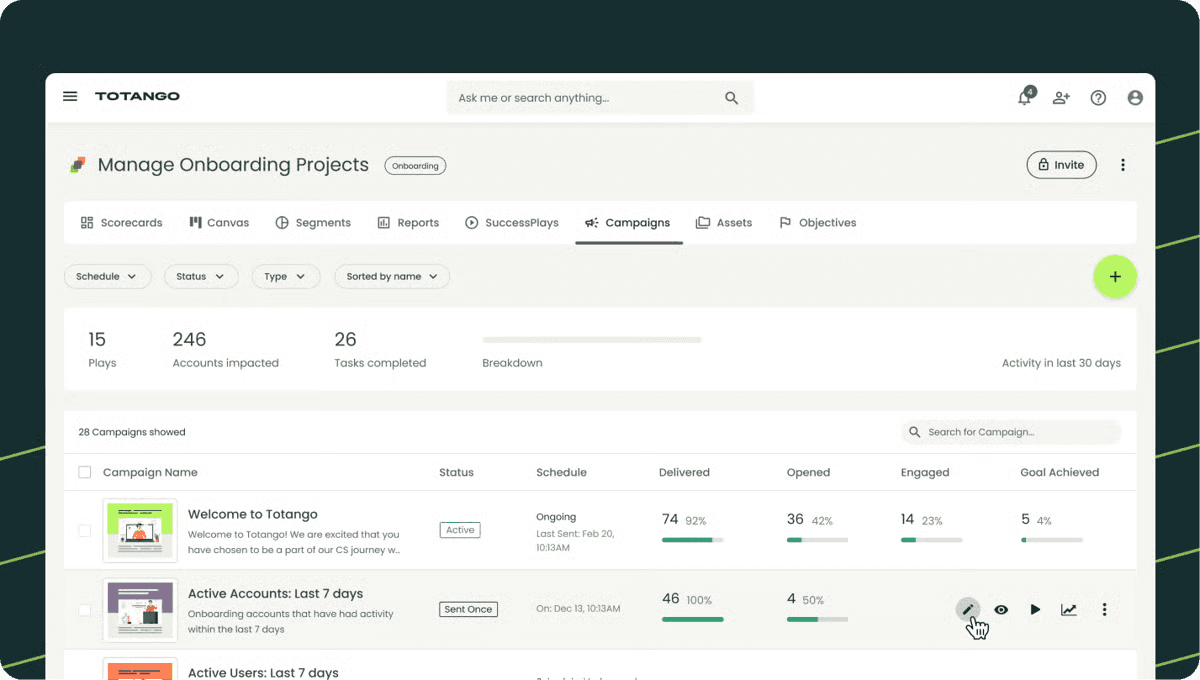
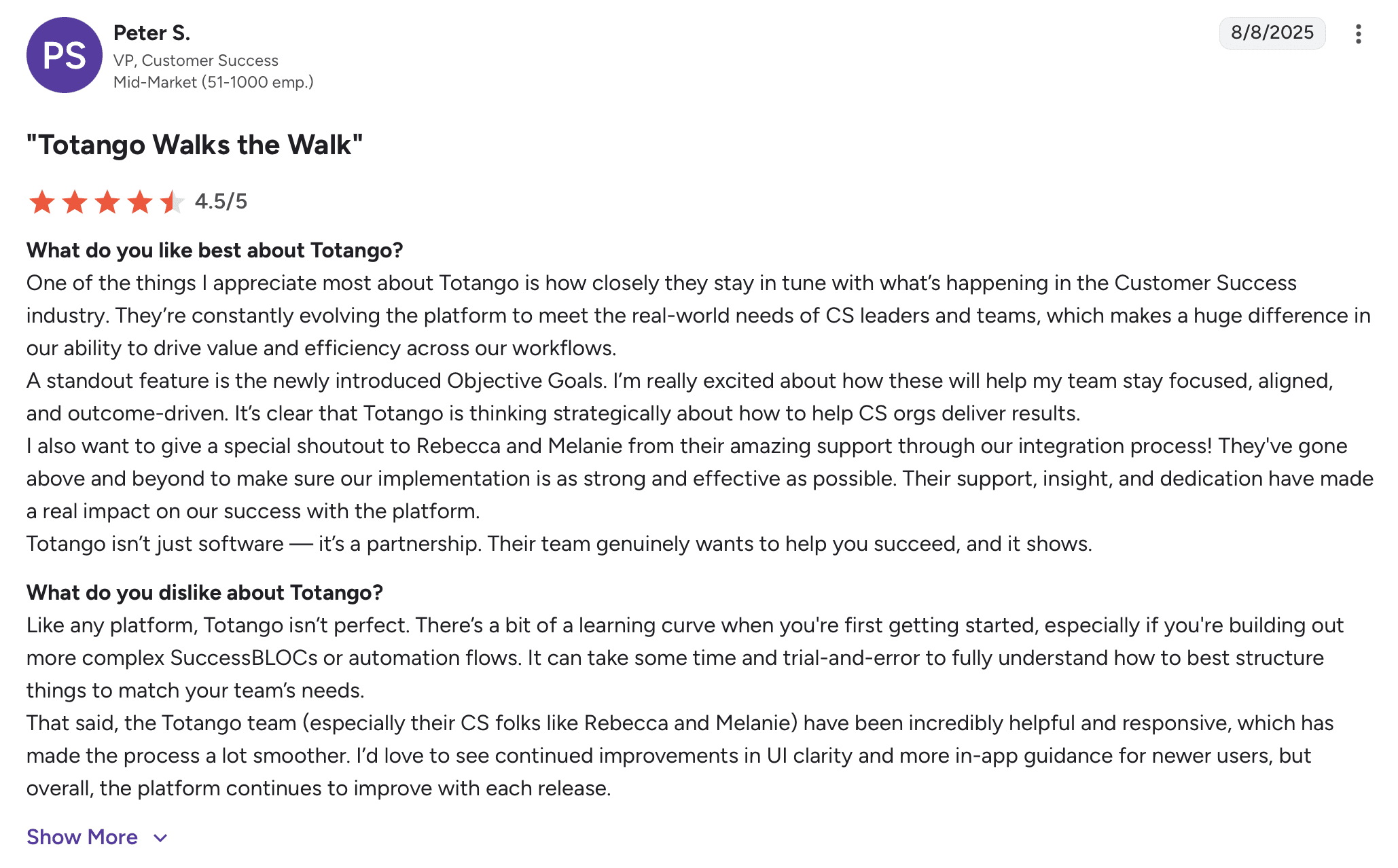
Totango targets PLG companies deeply integrated with Salesforce. Where Vitally is platform-agnostic, Totango goes deep on Salesforce native integration. Best for PLG teams where Salesforce is the source of truth for both product and customer data.
What Makes Totango Unique
Salesforce-Native: Deep integration making CS data accessible across revenue teams.
Pre-Built Playbooks: Industry best practices for PLG motions.
Objective Goals: Focus on measurable outcomes vs. activity metrics.
Multi-Channel: Email, in-app, SMS beyond just product analytics.
How it Compares to HQ1
Totango makes Salesforce data accessible; HQ1 makes it intelligent. Both integrate with Salesforce, but HQ1 adds AI that automatically enriches your CRM with insights from product usage, conversations, and sentiment. Choose Totango for Salesforce depth; choose HQ1 for intelligence.
Drawbacks
Limited journey management for complex workflows
Pricing opacity and contract inflexibility
Rigid framework doesn't fit all PLG models
Reporting lacks sophistication for data-driven teams
Best Suited For
Mid-market PLG companies where Salesforce is non-negotiable and CS must integrate tightly with Sales processes.
Pricing
$50k–$150k/year
Implementation Time
2-4 months
8. Productboard (CS Module)
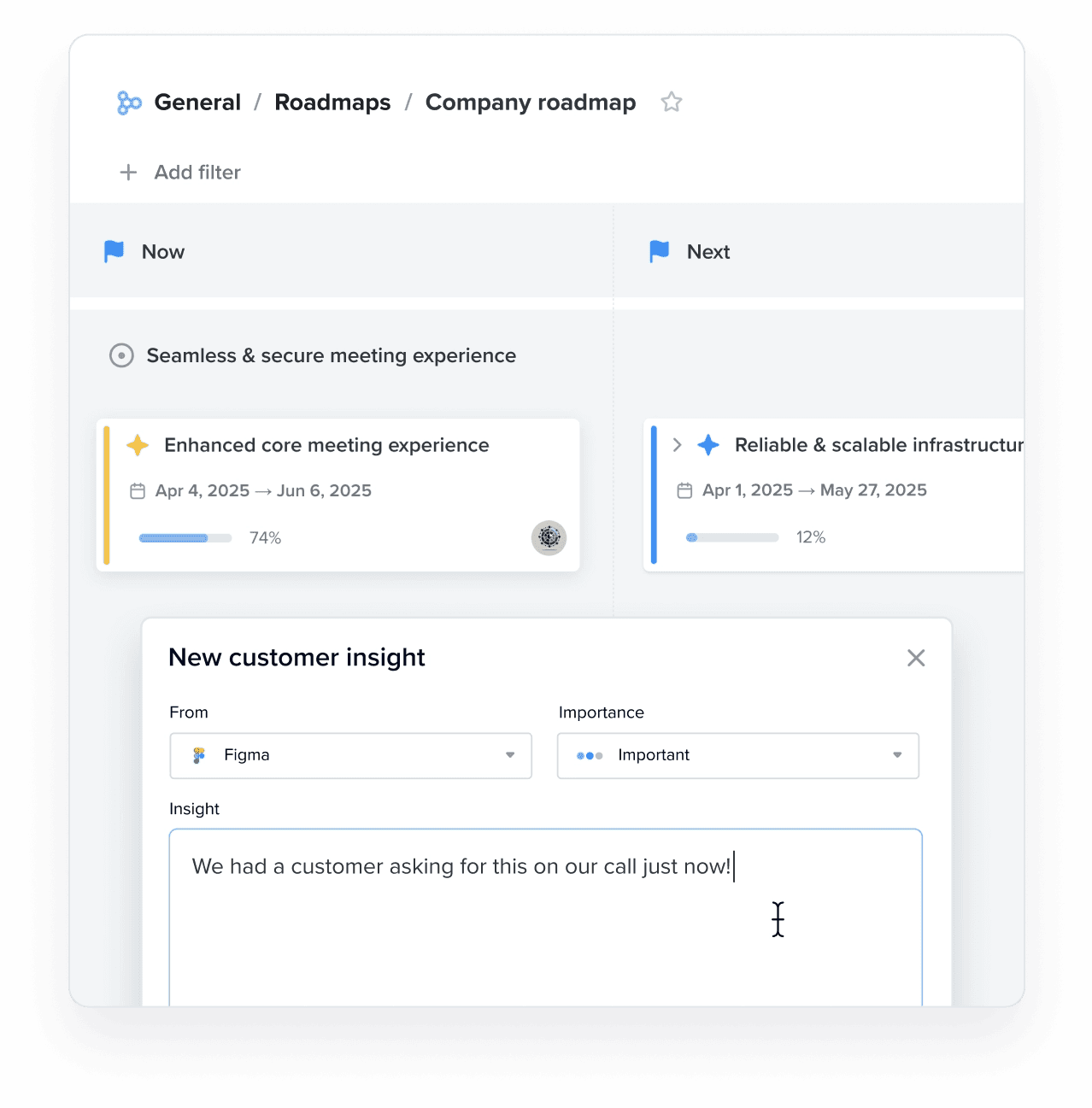
Productboard is expanding from product management into CS territory with features focused on feedback aggregation and product-driven CS. Where Vitally analyzes product usage, Productboard connects usage to product roadmap decisions. Best for product-led teams where CS and Product are tightly coupled.
What Makes Productboard Unique
Product Feedback Loop: Automatically aggregate customer feedback and connect to roadmap priorities.
PM + CS Collaboration: Built for tight integration between product and customer success teams.
Usage + Feedback Combined: Links what customers do with what they request.
Roadmap Visibility: Give CS visibility into what's being built and why.
How it Compares to HQ1
Productboard connects CS to product roadmap; HQ1 connects CS to revenue outcomes. Productboard helps Product teams; HQ1 helps CS drive retention and expansion. Different focus areas—choose based on whether your CS team reports to Product or Revenue.
Drawbacks
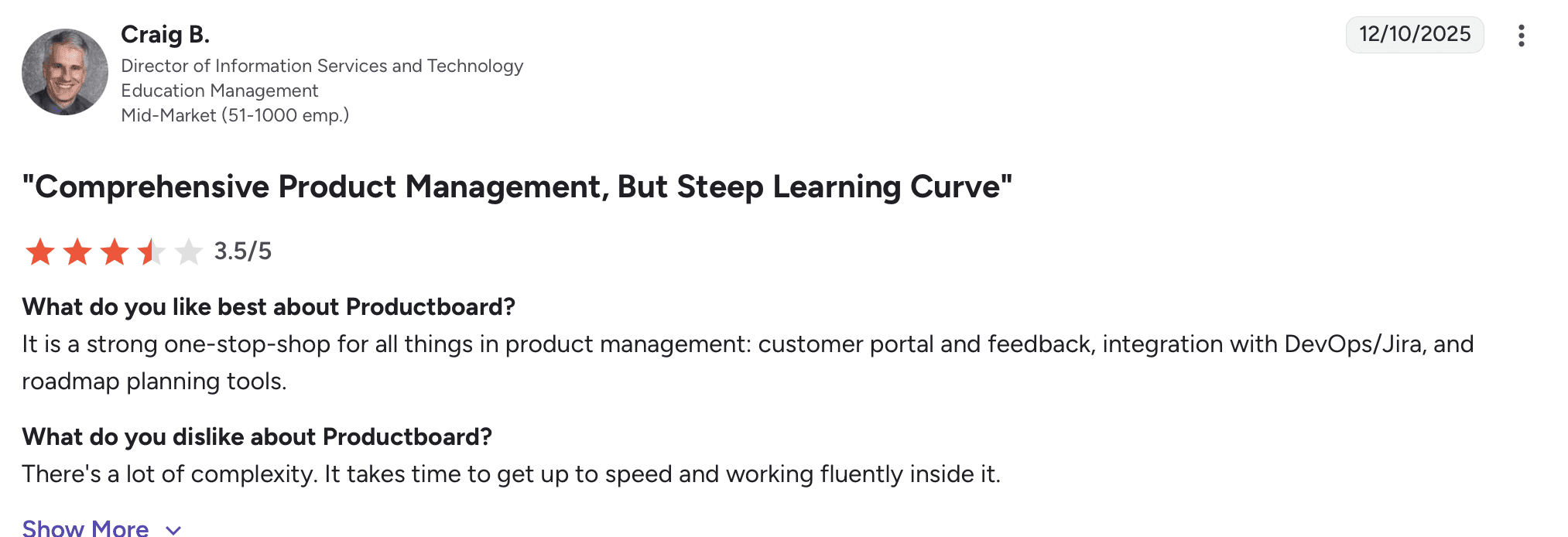
CS features still nascent compared to dedicated platforms
Limited traditional CS workflows like health scoring
Smaller CS-specific community
Pricing can be high for what CS teams actually need
Best Suited For
PLG companies where CS reports to Product and the primary job is feeding product development vs. driving revenue.
Pricing
On request
Implementation Time
3-6 weeks
9. Catalyst
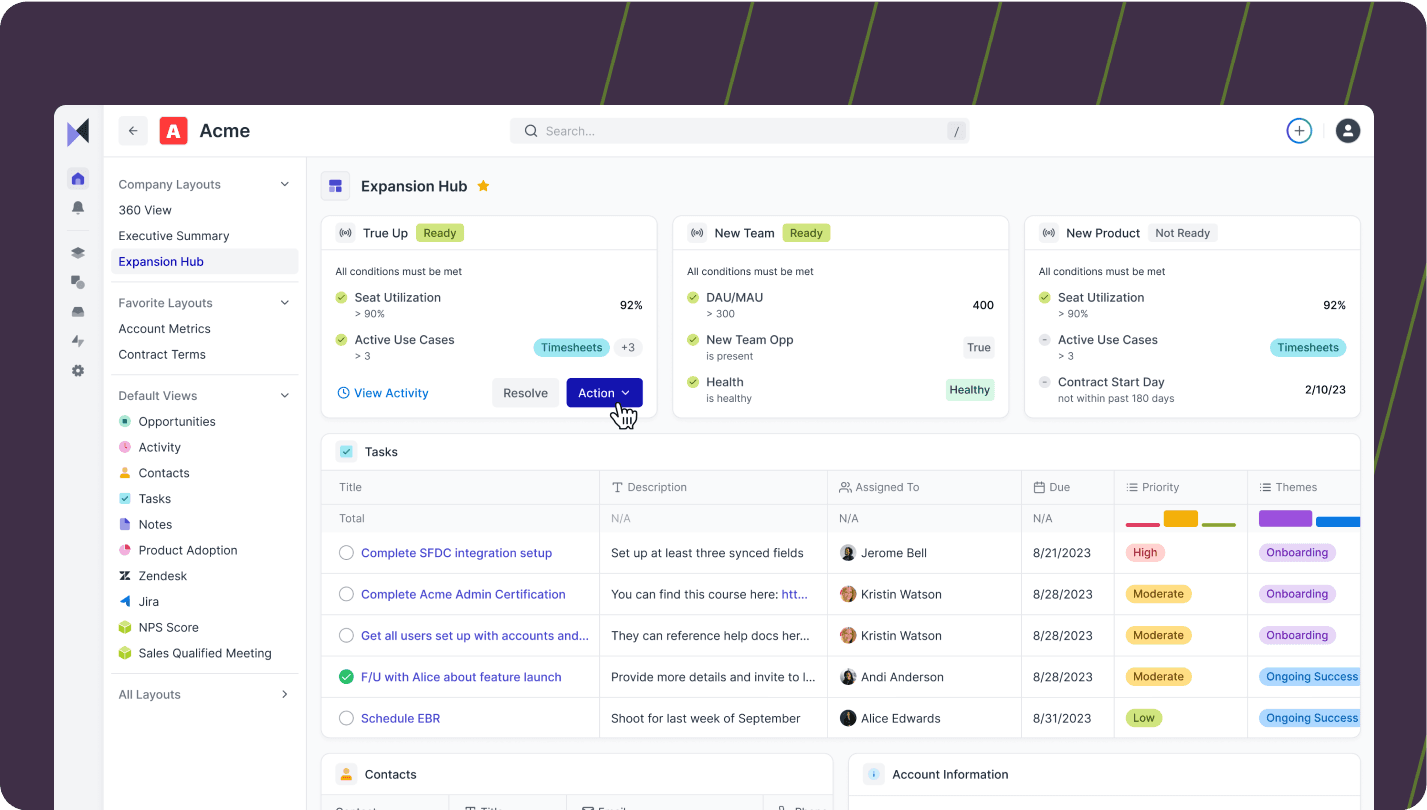
Catalyst focuses on relationship intelligence for PLG companies scaling into enterprise accounts. Where Vitally tracks product usage, Catalyst maps stakeholder relationships and collaboration. Best for PLG companies adding enterprise sales motion and needing relationship visibility.
What Makes Catalyst Unique
Stakeholder Mapping: Visual relationship maps showing who knows whom—critical as PLG adds enterprise.
Collaboration-First: Built for teams where CS, Sales, and Product work closely.
Communication Tracking: Surfaces engagement gaps Vitally's product focus misses.
Modern Interface: Clean design prioritizing ease of use.
How it Compares to HQ1
Catalyst shows relationship health; HQ1 shows revenue health. Catalyst tracks who's engaged; HQ1's AI interprets what engagement means for churn and expansion. Choose Catalyst for relationship mapping; choose HQ1 for revenue intelligence.
Drawbacks
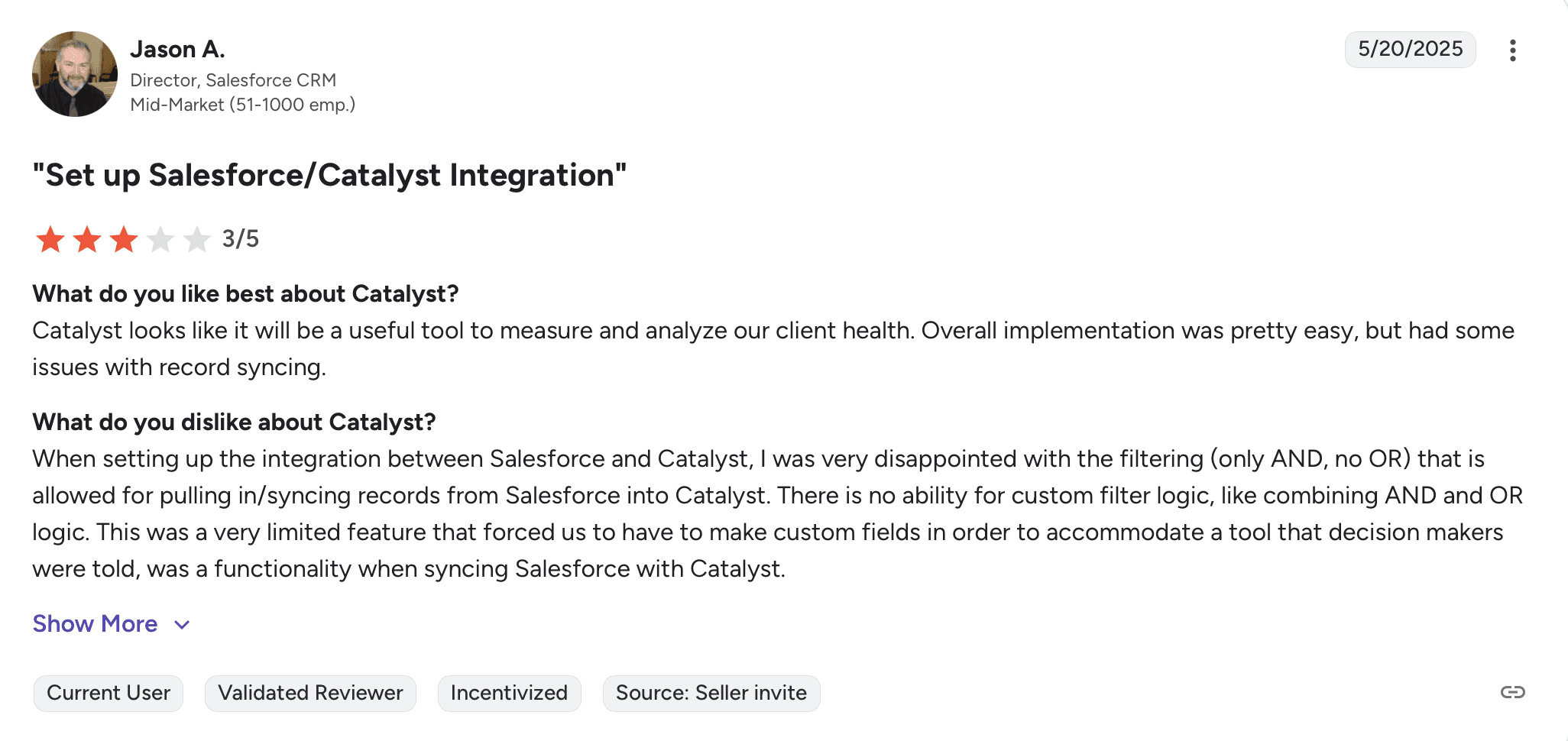
Limited product usage tracking vs. Vitally's strength
Smaller overall feature set than established platforms
Newer platform means less mature integrations
Product still evolving—features and pricing in flux
Best Suited For
Mid-market PLG companies adding enterprise motion where relationship mapping matters more than deep product analytics.
Pricing
On request
Implementation Time
2-4 weeks
10. ClientSuccess
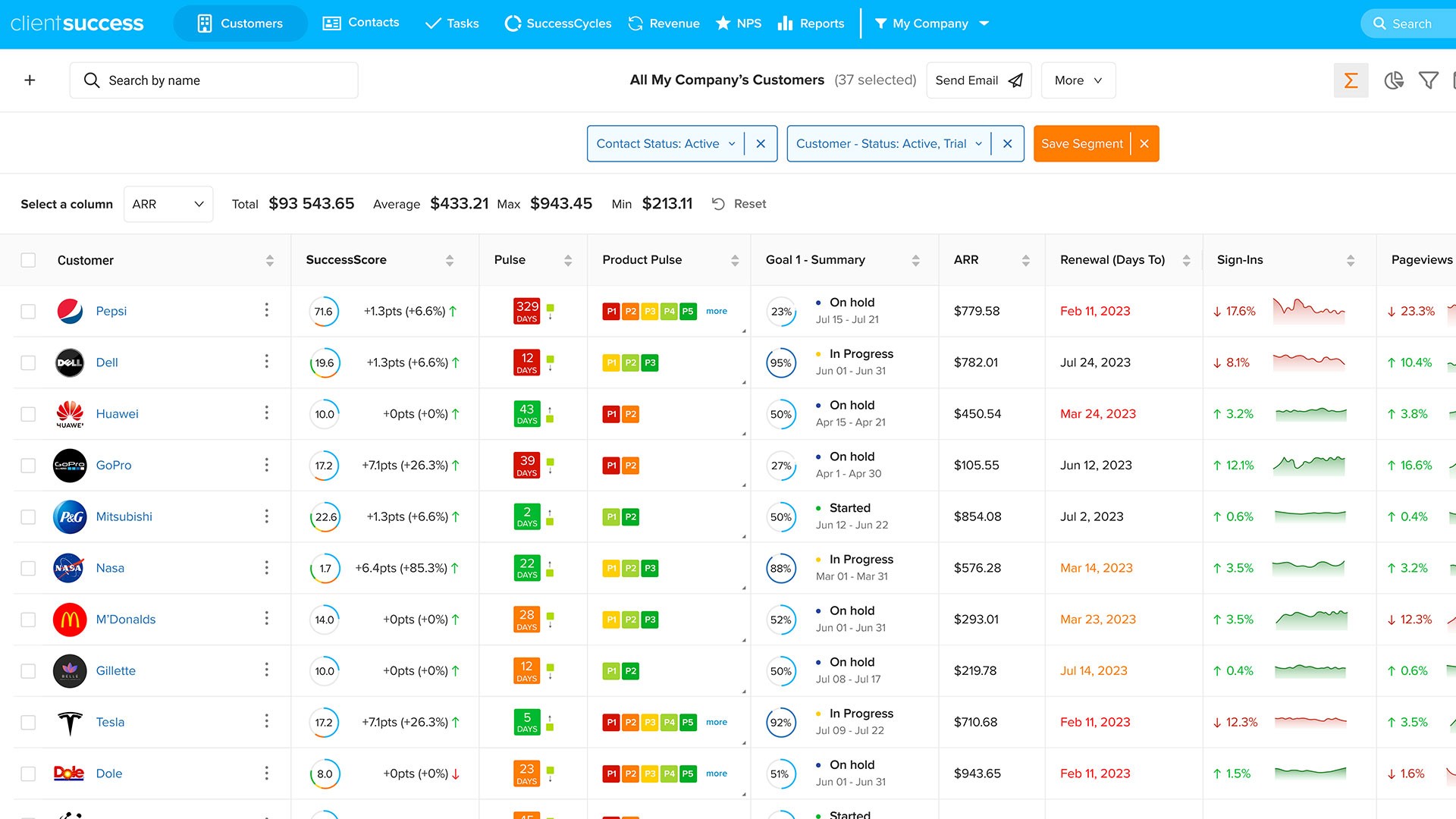
ClientSuccess is the budget-friendly alternative for PLG companies with simple needs. Where Vitally offers sophisticated product analytics, ClientSuccess offers basic CS functionality at fraction of the cost. Best for very early-stage PLG companies (<50 customers) with minimal budget.
What Makes ClientSuccess Unique
Lowest Price Point: $8k-$34k annually vs. Vitally's typical pricing.
Email Sync: Basic communication tracking ensuring continuity.
Quick Setup: 2-4 weeks without technical complexity.
No Bloat: Core CS basics without overwhelming features.
How it Compares to HQ1
ClientSuccess offers basics affordably; HQ1 delivers AI intelligence ClientSuccess can't approach. ClientSuccess is a coordinator; HQ1 is an analyst. Choose ClientSuccess only if budget is the primary constraint and you're extremely early stage.
Drawbacks
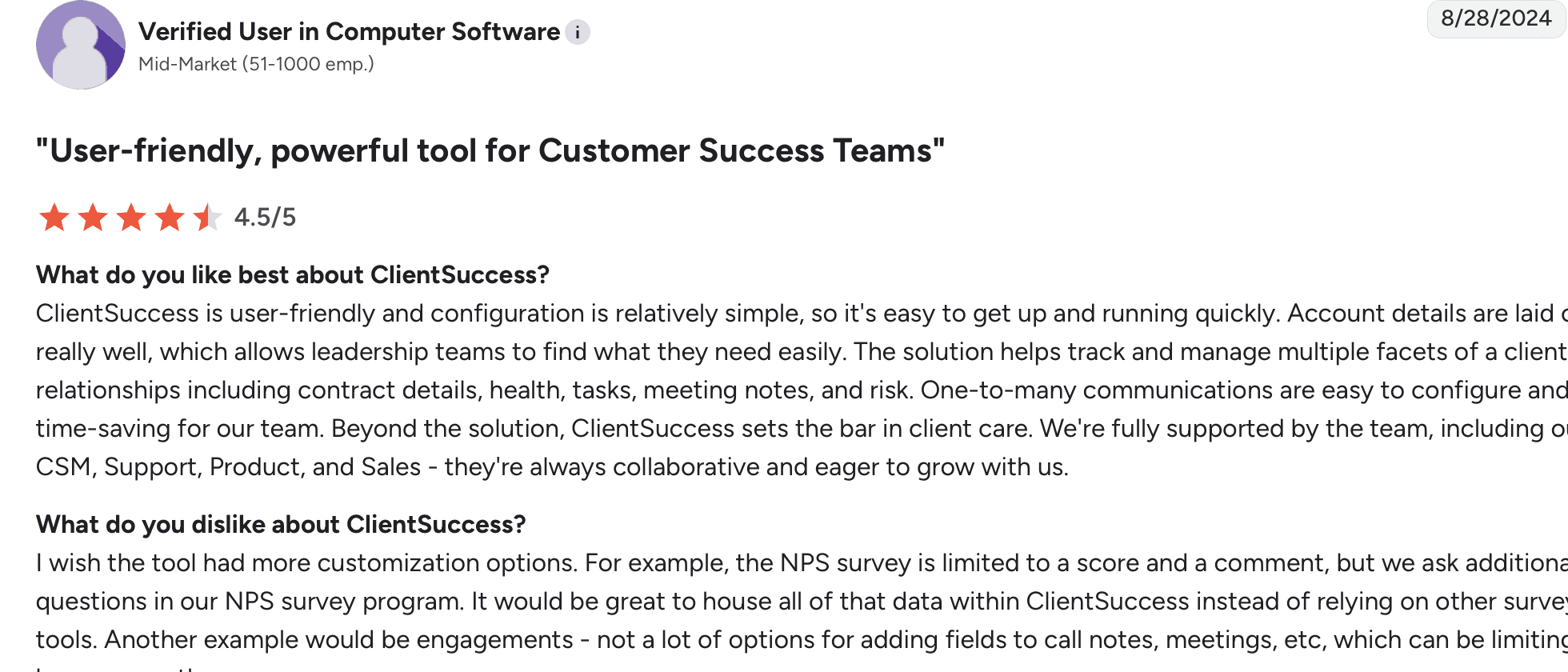
No meaningful product usage tracking—critical gap for PLG
Very limited integrations
Doesn't scale beyond early stage
Missing features PLG companies typically need
Best Suited For
Bootstrapped PLG startups with <50 customers needing absolute basics before they can afford proper platforms.
Pricing
$8k–$34k/year
Implementation Time
2-4 weeks
Making the Right Choice
Vitally excels when you're early-stage PLG with simple structures focused purely on product adoption. But as you scale, add enterprise customers, or need CS to drive revenue beyond product usage, the limitations become dealbreakers.
Choose HQ1 if you:
Need intelligence beyond product usage—conversations, sentiment, competitor mentions
Want AI that acts automatically, not dashboards requiring interpretation
Have enterprise customers who need multiple account owners
Need CS to drive revenue, not just monitor product adoption
Want 4-10 day implementation vs. technical setup complexity
Choose another platform if:
You're very early stage PLG (<50 customers) with minimal budget → ClientSuccess
You have CS Ops and want maximum customization → Planhat
You're at Atlassian scale needing enterprise governance → Gainsight
You're Salesforce-centric → Totango
You want product adoption tools, not CS platform → Userpilot
You're Slack-first support team → Pylon
The fundamental question isn't "which platform has the best product analytics?" It's "does product usage alone predict churn and expansion, or do you need intelligence from conversations, sentiment, and engagement patterns too?"
Vitally shows you what's happening in your product. HQ1 shows you what's happening across all customer touchpoints and automatically acts on it. The platforms replacing Vitally aren't trying to do product analytics better—they're trying to understand the complete customer story and turn it into revenue outcomes.
Related Articles & Fresh Insights
Keep exploring new perspectives, in-depth guides, and expert opinions, carefully curated to help you stay informed, inspired, and confident in every real estate decision.


Close more. Churn less. Grow continuously.
Unlock AI-driven enablement for your Sales and Customer Success teams — drive conversions, boost retention, and scale faster with HQ1.
