Written by:
Devansh Tripathi
Published in:
October 12, 2025
Read Time:
14 minutes
Categories:
Customer Success
Top 10 alternatives to Totango in 2026
ChurnZero has built its reputation on best-in-class playbook automation and exceptional customer support. But as CS teams mature from automating known workflows to discovering hidden opportunities using AI, the gaps become clear. Most platforms - ChurnZero included, help you automate what you already know to do. The best CS teams need platforms that tell them what they should do based on signals they'd otherwise miss.
That requires more than intuitive playbook builders and excellent support. It requires AI that proactively identifies opportunities: detecting expansion signals in conversations, flagging competitor mentions across channels, predicting churn from sentiment shifts, and auto-enriching CRMs—all without manually configuring triggers and rules for every scenario.
ChurnZero offers powerful automation with an intuitive interface and supportive implementation team. The playbook builder is genuinely best-in-class for creating automated customer journeys. But this focus comes with tradeoffs: Plays and Journeys are fragmented into separate features, segment complexity makes displaying all necessary data difficult, multi-clause reporting requires manual workarounds, and pricing can escalate significantly as you add modules and contacts.
Why teams choose ChurnZero
Best Playbook Builder: Most intuitive automation in CS software
Exceptional Support: Team treats implementation as true partnership
Powerful Segmentation: Create targeted customer segments for precise automation
Real-Time Alerts: Immediate notifications when accounts hit thresholds
In-App Engagement: Deliver messages inside your product without engineering
3-Month Implementation: Reasonable time to productivity
Why teams outgrow ChurnZero
Fragmented Journeys: Plays and Journeys are separate with no cohesive workflow builder
Manual Rule Building: You configure every trigger; platform doesn't detect opportunities automatically
Segment Complexity: Hard to display all necessary data in account-based segments
Complex Reporting: Multi-clause reports require creating multiple smaller ones and combining manually
Pricing Escalation: Costs increase significantly as you add modules, users, contacts
Limited Intelligence: Automates what you build, doesn't tell you what to build
Platform Comparison: What Sets HQ1 Apart
Capability | HQ1 | ChurnZero | Gainsight | Planhat | Totango | Custify |
|---|---|---|---|---|---|---|
AI That Acts (not manual rules) | ✅ Auto-detects opportunities | ❌ Manual triggers | ❌ Manual workflows | ❌ Manual workflows | ❌ Manual workflows | ❌ Manual workflows |
Automatic CRM Enrichment | ✅ All conversations | ❌ Manual entry | Partial | ❌ Manual entry | ❌ Manual entry | ❌ Manual entry |
Competitor Detection | ✅ Across all channels | ❌ | ❌ | ❌ | ❌ | ❌ |
Expansion Signal Detection | ✅ AI-powered | Manual playbook rules | Manual rules | Manual rules | Manual rules | Manual rules |
Implementation Time | 4-10 days | 3 months | 3-6 months | 8-16 weeks | 2-4 months | 4-8 weeks |
Journey Builder | ✅ AI-driven | Best manual builder | Complex | Moderate | Moderate | Basic |
Reporting | ✅ Intelligent | Multi-clause complexity | Deep but slow | Customizable | Rigid | Moderate |
Pricing | On request | $28k-$75k/yr (escalates) | $100k+/yr | $60k-$180k/yr | $50k-$150k/yr | $20k-$60k/yr |
Best For | Revenue intelligence without manual rules | Mid-market manual automation | Large enterprises | Ops-heavy teams | Salesforce-centric | Mid-market flexibility |
HQ1
HQ1 delivers the intelligence ChurnZero's playbooks promise but automates what ChurnZero makes you build manually. While ChurnZero helps you automate workflows you've already identified, HQ1's AI agents proactively detect opportunities you'd miss — expansion signals, competitor mentions, churn predictors and act automatically. Best for teams wanting ChurnZero's automation power without manually configuring every scenario.
What Makes HQ1 Unique
Proactive Intelligence: AI automatically detects expansion opportunities, churn signals, competitor mentions without you building rules for every possible scenario.
Automatic Action: Enriches CRMs from conversations, creates tasks when risks appear, alerts teams about opportunities—without manual trigger configuration.
4-10 Days to Productivity: vs. ChurnZero's 3-month implementation. Pre-built AI agents work immediately instead of spending months building playbooks.
Unified Journeys: Complete customer journey intelligence vs. ChurnZero's fragmented Plays and Journeys.
How it Compares to ChurnZero
ChurnZero has the best manual playbook builder; HQ1 has AI that eliminates manual building. ChurnZero automates workflows you configure; HQ1's AI detects what workflows you should run based on signals in your data. ChurnZero requires building triggers for every scenario; HQ1 learns patterns and adapts. Choose ChurnZero if you know exactly what to automate; choose HQ1 to discover what you should automate.
Drawbacks
Newer platform means smaller community than ChurnZero's established user base
Less manual control over exact workflow steps vs. ChurnZero's detailed builder
AI effectiveness depends on data quality
Best Suited For
Mid-market to enterprise teams wanting proactive intelligence and automation without spending months building playbooks for every possible customer scenario.
Pricing
Available on request
Implementation Time
4-10 days
2. Gainsight
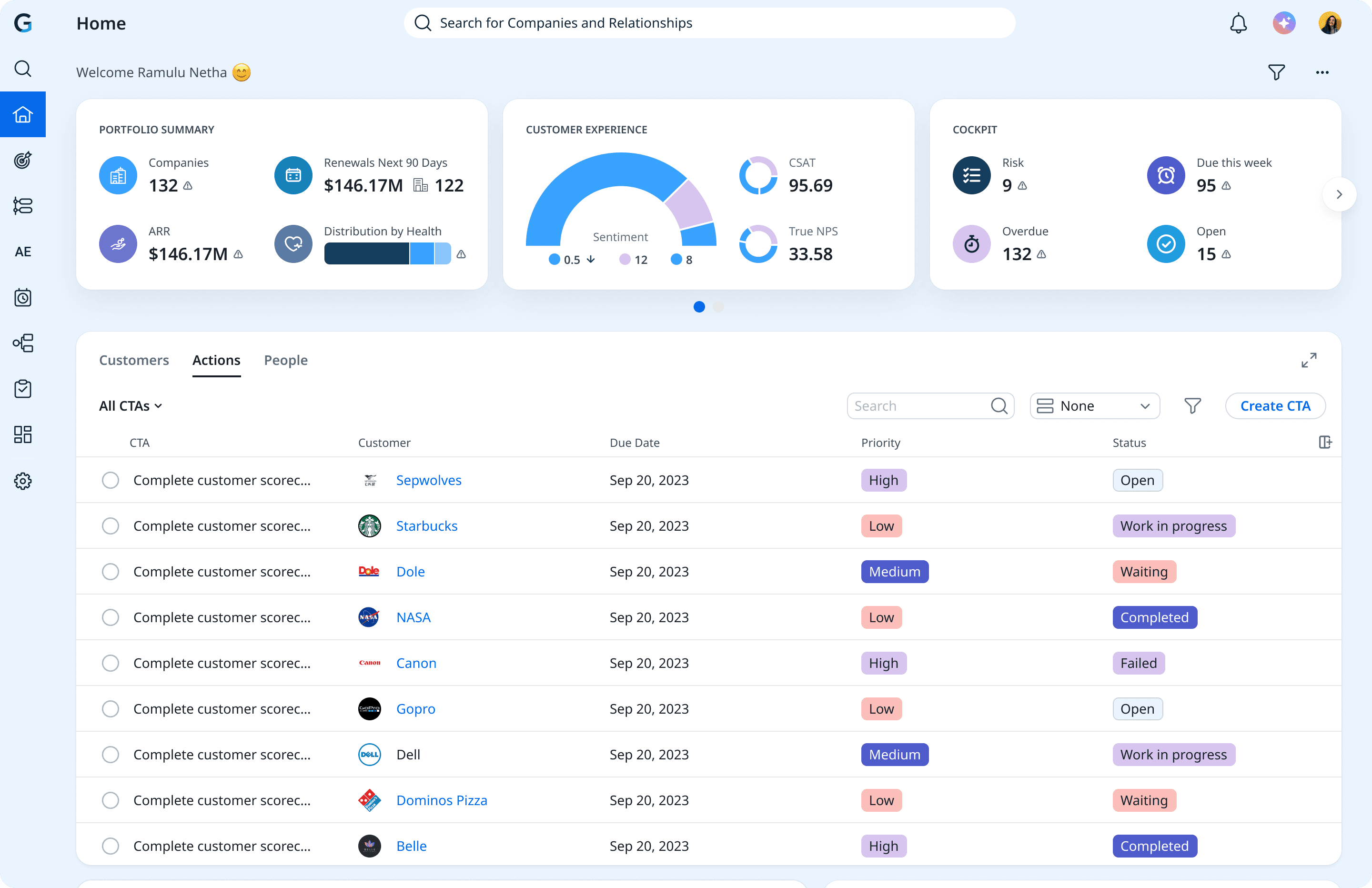
Gainsight offers more comprehensive features than ChurnZero with deeper enterprise capabilities. Where ChurnZero focuses on intuitive automation, Gainsight offers maximum configurability with enterprise governance. Best for large teams outgrowing ChurnZero's mid-market sweet spot and needing enterprise scale.
What Makes Gainsight Unique
Enterprise Scale: Handles thousands of accounts with complex hierarchies beyond ChurnZero's capabilities.
Journey Orchestrator: More sophisticated than ChurnZero's builder with deeper branching logic.
Comprehensive Reporting: SQL-level power vs. ChurnZero's multi-clause reporting challenges.
Strong Governance: Enterprise controls ChurnZero lacks.
How it Compares to HQ1
Gainsight offers maximum control but requires 3-6 months and multiple CS Ops people. HQ1 delivers enterprise intelligence in 4-10 days with AI that works immediately. Gainsight gives you tools to build everything; HQ1 gives you intelligence that acts automatically. Choose Gainsight for governance at massive scale; choose HQ1 for intelligence without ops burden.
Drawbacks
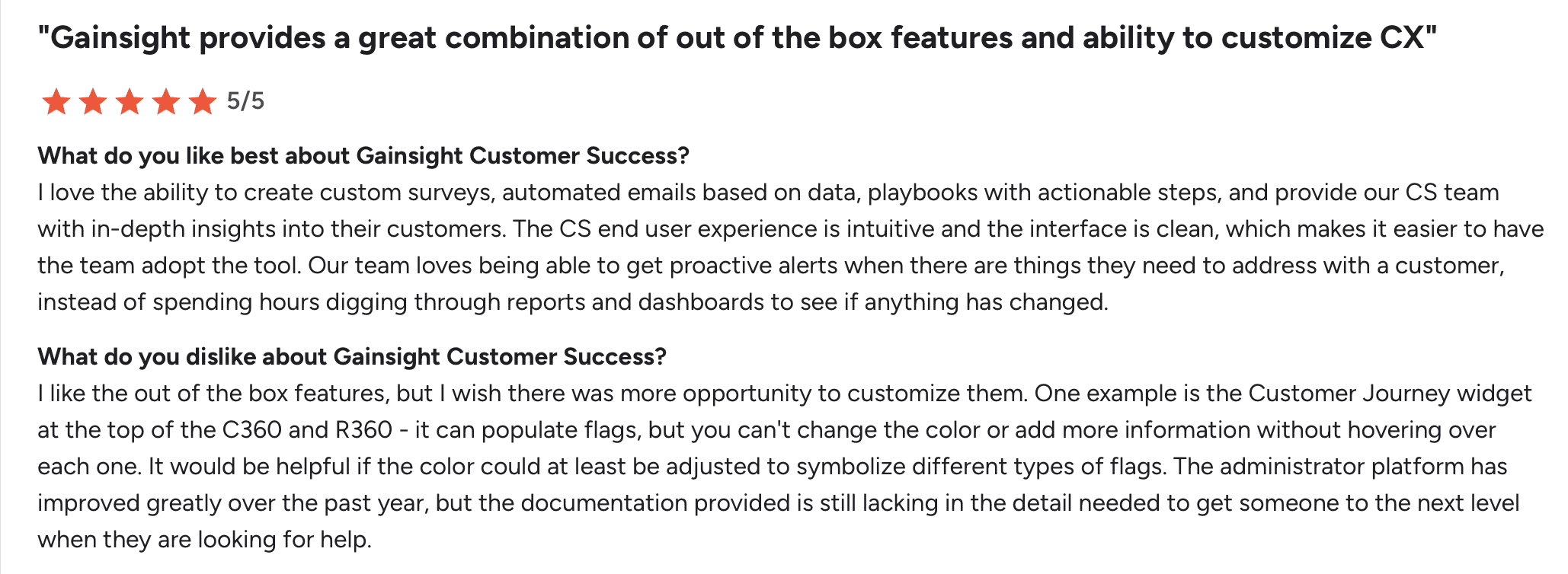
$100k+ annually vs. ChurnZero's $28k-$75k range—massive cost increase
3-6 month implementation vs. ChurnZero's 3 months
Requires multiple CS Ops people vs. ChurnZero's manageable complexity
Slow performance—reports taking 30+ seconds
Support quality declined after recent layoffs
Best Suited For
Large enterprises (100+ CSMs, 1000+ accounts) outgrowing ChurnZero's capabilities and needing maximum governance despite cost and complexity.
Pricing
$100k+/year
Implementation Time
3-6 months minimum
3. Planhat
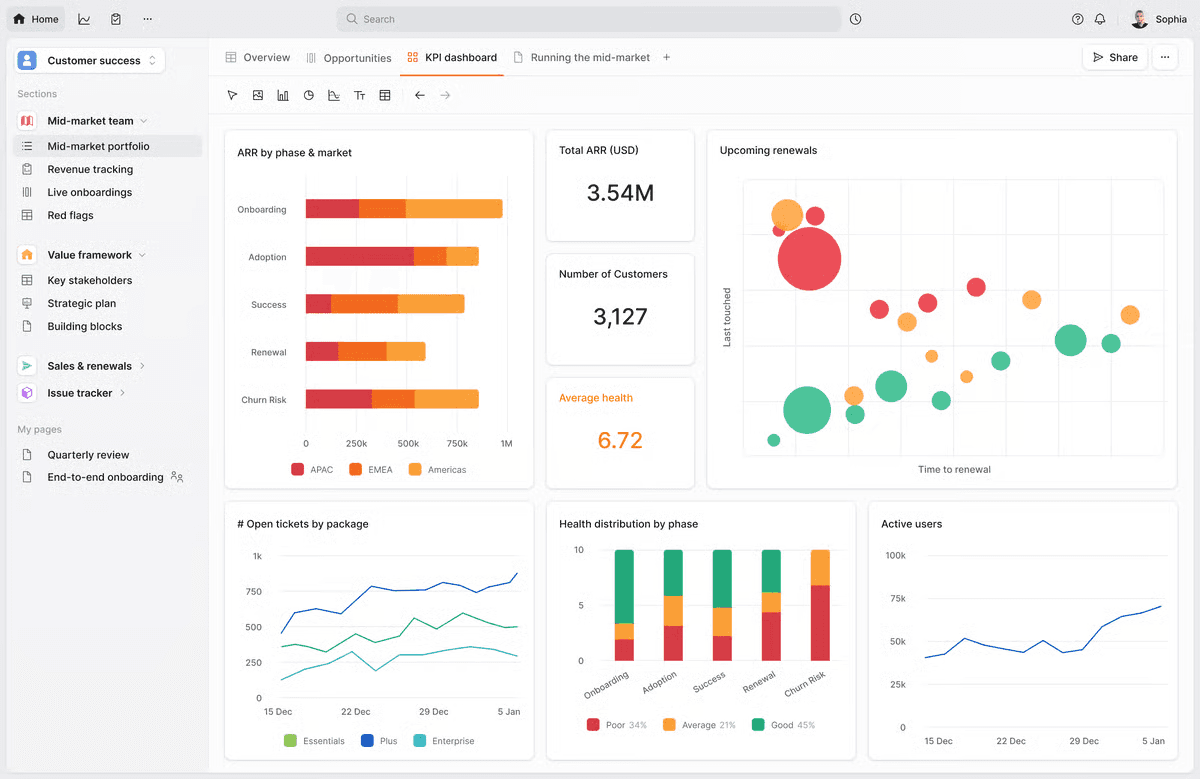
Planhat offers ChurnZero's automation capabilities wrapped in beautiful UI with deeper customization. Where ChurnZero focuses on intuitive playbooks, Planhat offers broader data consolidation with sophisticated health modeling. Best for teams wanting more than ChurnZero's automation-first approach.
What Makes Planhat Unique
Beautiful + Powerful: Sleek, modern interface vs. ChurnZero's functional but less polished design.
No Per-Seat Pricing: Predictable costs as teams scale vs. ChurnZero's per-user model.
Unified Data Model: Product usage, revenue, engagement consolidated beyond ChurnZero's scope.
Deep Customization: Tailor everything to your process vs. ChurnZero's more opinionated structure.
How it Compares to HQ1
Planhat offers customization requiring ops expertise; HQ1 delivers intelligence out of the box. Planhat gives you tools to build health models; HQ1's AI automatically detects what predicts churn. Planhat needs 8-16 weeks of configuration; HQ1 works in days. Choose Planhat for customization; choose HQ1 for intelligence.
Drawbacks
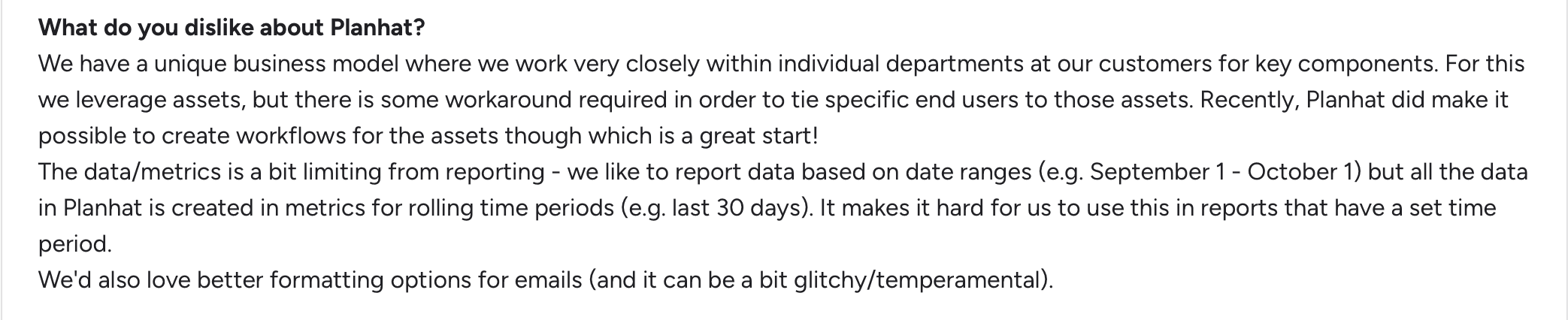
$60k-$180k pricing vs. ChurnZero's $28k-$75k—significant increase
8-16 week implementation vs. ChurnZero's 3 months
Requires CS Ops expertise vs. ChurnZero's user-friendly approach
Performance issues with large datasets
Best Suited For
Mid-market to enterprise teams with CS Ops resources wanting broader functionality and beautiful UI beyond ChurnZero's automation focus.
Pricing
$60k–$180k/year
Implementation Time
8-16 weeks
4. Totango/Catalyst
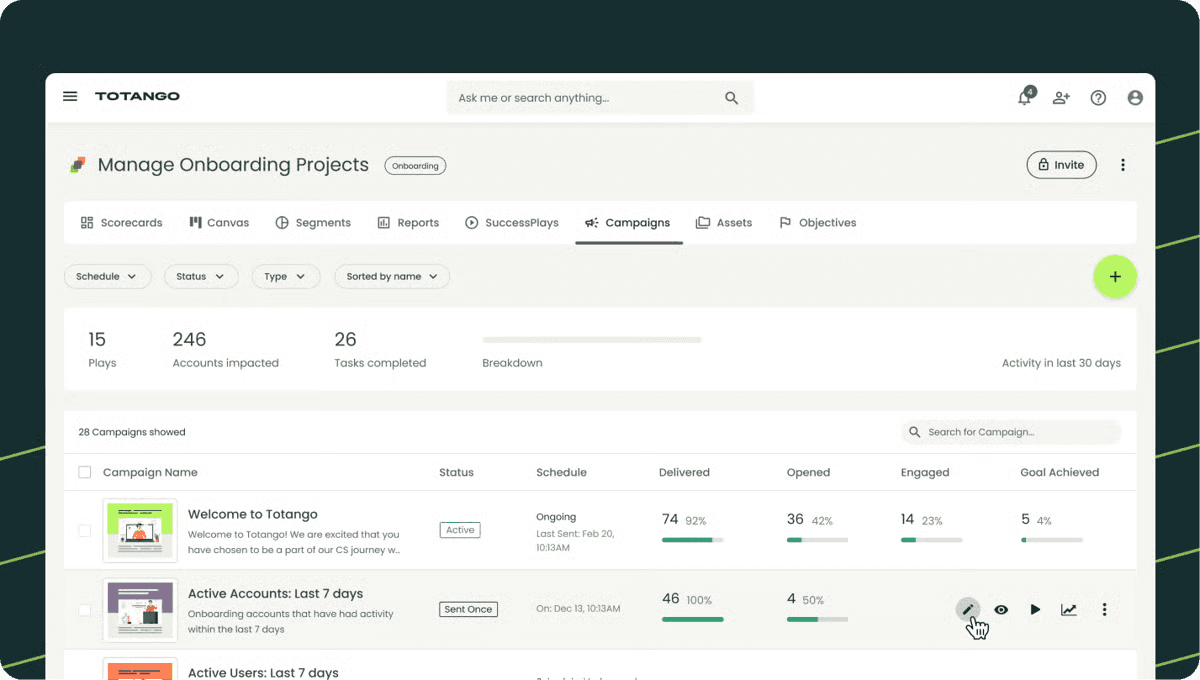
Totango competes directly with ChurnZero for mid-market automation but with deeper Salesforce integration. Where ChurnZero is platform-agnostic, Totango goes native on Salesforce. Best for teams where Salesforce integration is critical and ChurnZero's connector approach feels insufficient.
What Makes Totango Unique
Salesforce-Native: Deep integration vs. ChurnZero's standard connector—CS data flows bidirectionally across revenue org.
Pre-Built Playbooks: Industry best practices similar to ChurnZero's approach but Salesforce-optimized.
Objective Goals: Focus on measurable outcomes vs. activity tracking.
2-4 Month Implementation: Slightly faster than ChurnZero in some cases.
How it Compares to HQ1
Totango makes Salesforce data accessible; HQ1 makes it intelligent. Both integrate with Salesforce, but HQ1 adds AI that automatically enriches your CRM with insights from conversations and sentiment. Totango requires manual playbook building like ChurnZero; HQ1's AI acts automatically.
Drawbacks
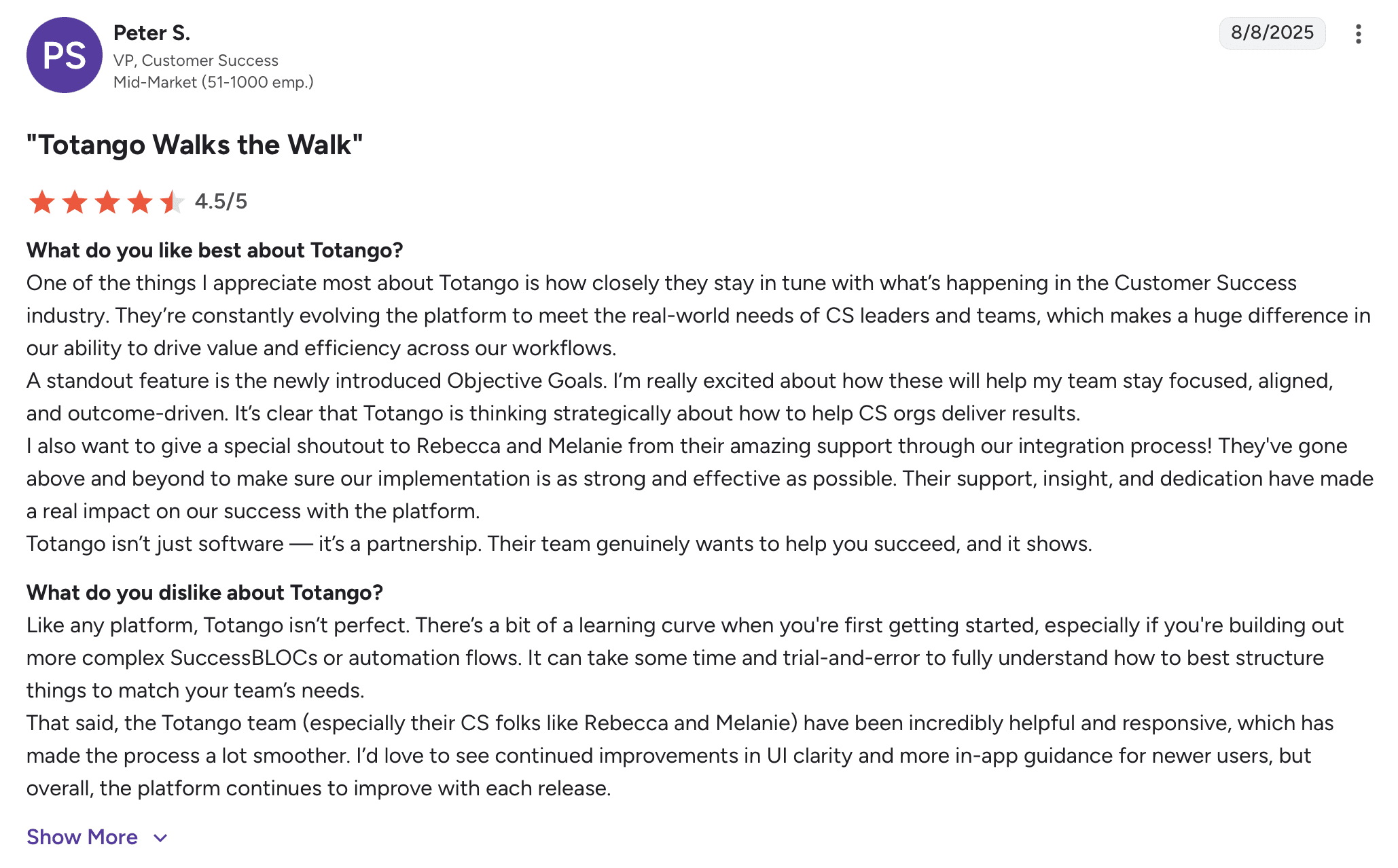
$50k-$150k pricing, higher than ChurnZero at comparable scales
Limited journey management despite positioning as automation platform
Pricing opacity and contract inflexibility frustrate users
Rigid framework doesn't accommodate all CS workflows
Best Suited For
Mid-market teams where Salesforce is the single source of truth and deeper integration justifies higher cost vs. ChurnZero.
Pricing
$50k–$150k/year
Implementation Time
2-4 months
5. Custify
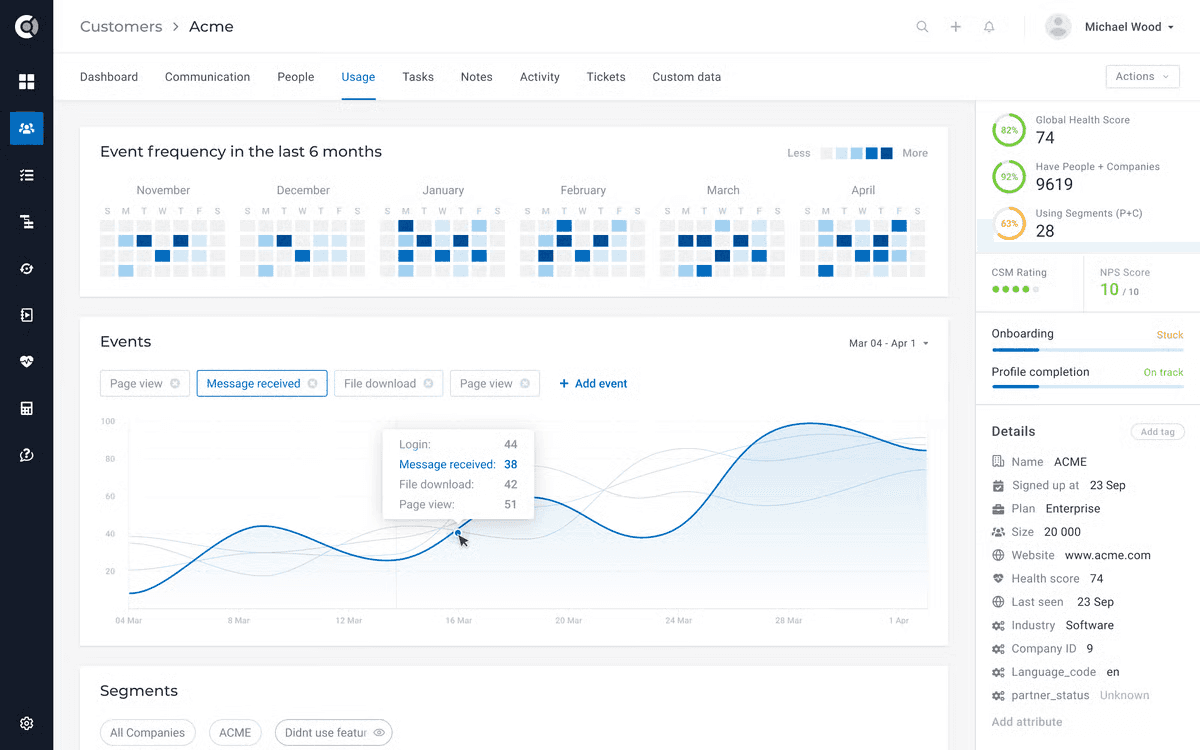
Custify offers ChurnZero-like customization at more predictable pricing without the journey fragmentation issues. Where ChurnZero separates Plays and Journeys, Custify offers more unified workflow building. Best for teams wanting flexibility without ChurnZero's specific workflow limitations.
What Makes Custify Unique
Predictable Pricing: $20k-$60k vs. ChurnZero's escalating module-based costs.
Warehouse Integrations: Connect Snowflake, BigQuery, Redshift for custom data beyond standard integrations.
Unified Workflows: More cohesive automation building vs. ChurnZero's fragmented Plays/Journeys.
Responsive Support: Agile team similar to ChurnZero's exceptional support quality.
How it Compares to HQ1
Custify offers manual workflow building and customization; HQ1's AI automatically detects patterns and acts. Custify requires configuring health scores and triggers; HQ1's AI learns what predicts outcomes. Choose Custify for manual control; choose HQ1 for automated intelligence.
Drawbacks

Less intuitive playbook builder than ChurnZero's best-in-class tool
Missing global revenue dashboard
Documentation gaps vs. ChurnZero's comprehensive resources
EMEA support creates time zone challenges
Best Suited For
Mid-market teams wanting customization and predictable pricing without ChurnZero's playbook fragmentation or escalating costs.
Pricing
$20k–$60k/year
Implementation Time
4-8 weeks
6. Vitally

Vitally takes a product-first approach vs. ChurnZero's automation-first focus. Where ChurnZero excels at workflow automation, Vitally excels at product usage analytics. Best for PLG companies where product data matters more than ChurnZero's journey orchestration.
What Makes Vitally Unique
Product Usage Focus: Deep feature adoption analytics vs. ChurnZero's broader but shallower product tracking.
Custom Objects: Flexible data models vs. ChurnZero's more rigid structure.
2-4 Week Implementation: Faster than ChurnZero's 3 months.
PLG-Friendly: Built for freemium/trial models vs. ChurnZero's traditional CS focus.
How it Compares to HQ1
Vitally shows what customers do in your product; HQ1's AI understands why they're doing it and what it means for revenue. Vitally requires manual interpretation; HQ1 automatically detects expansion signals, churn risks, competitor threats across product AND conversations.
Drawbacks
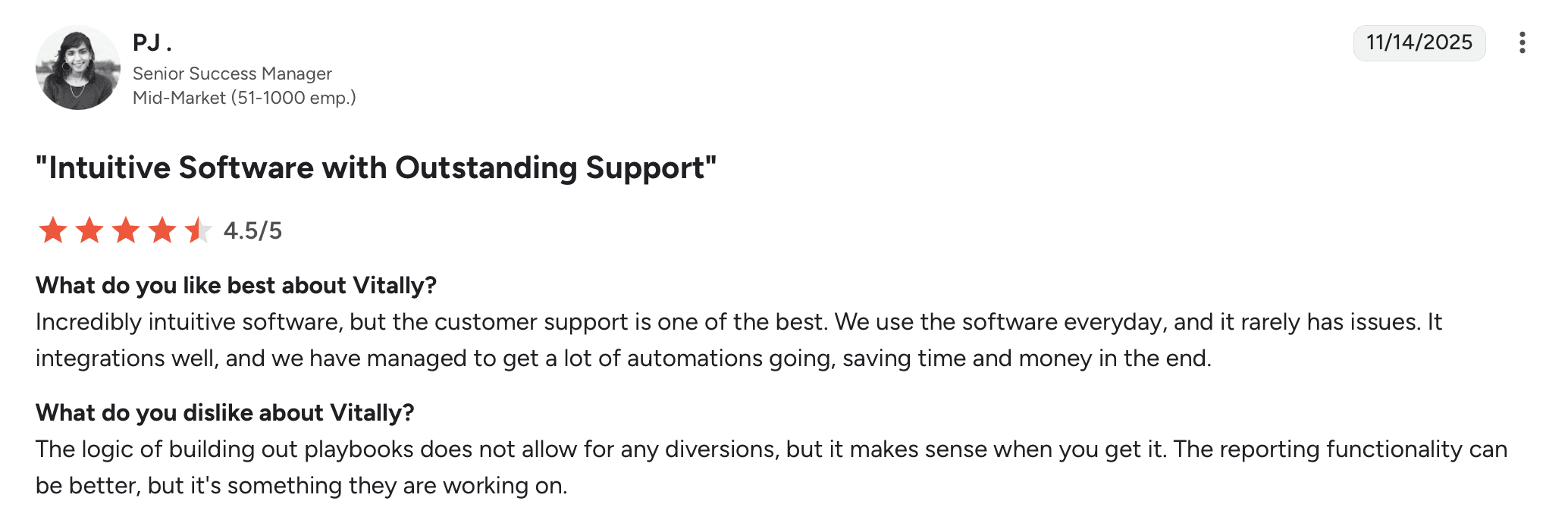
Single account owner limitation—major gap vs. ChurnZero's multi-stakeholder support
Limited automation vs. ChurnZero's powerful playbooks
Technical setup despite plug-and-play reputation
Expensive AI features for limited outcomes
Best Suited For
PLG companies where deep product usage analytics matter more than ChurnZero's automation capabilities.
Pricing
On request
Implementation Time
2-4 weeks
7. Catalyst
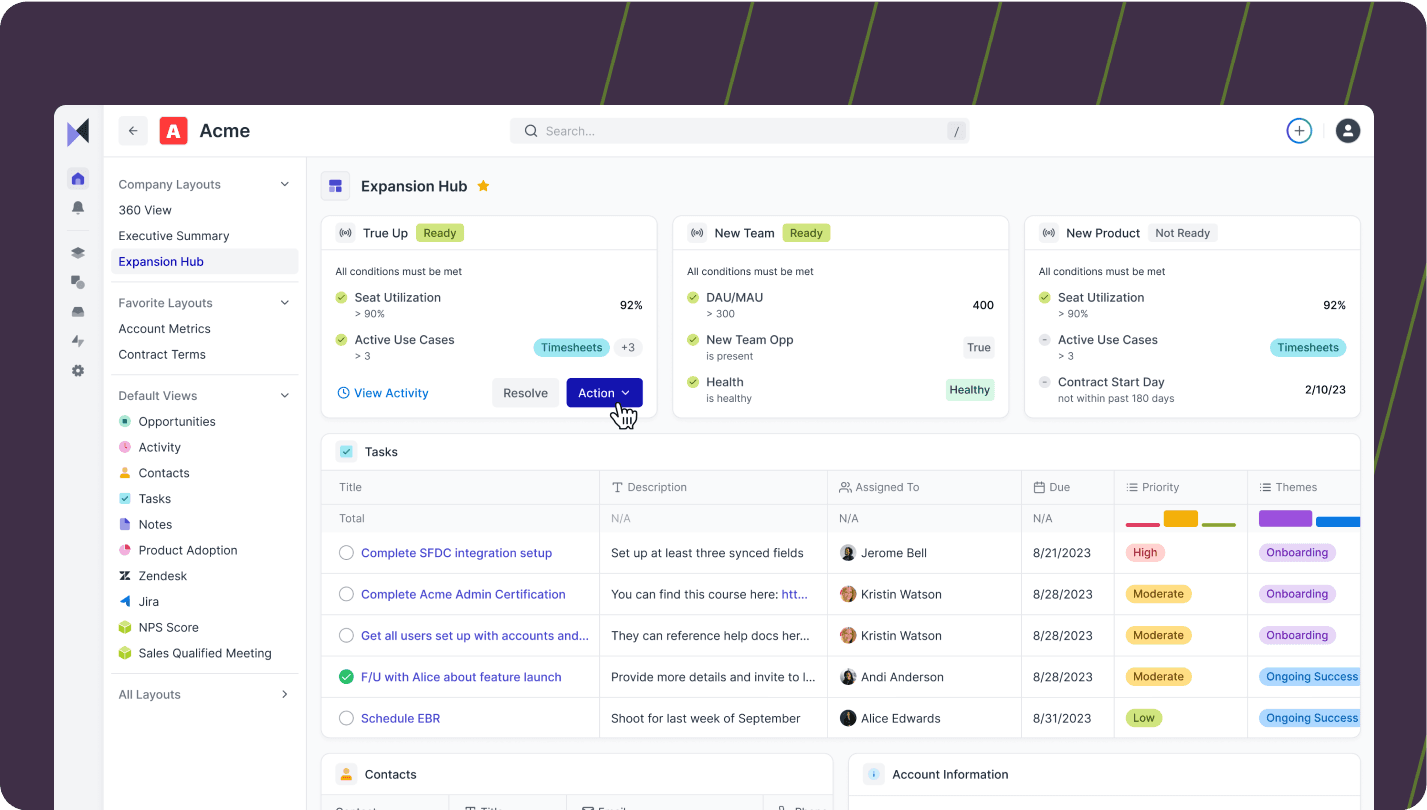
Catalyst focuses on relationship intelligence vs. ChurnZero's workflow automation. Where ChurnZero automates tasks, Catalyst maps stakeholder relationships. Best for high-touch CS models where relationship quality matters more than automated playbooks.
What Makes Catalyst Unique
Stakeholder Mapping: Visual relationship maps vs. ChurnZero's contact management.
Collaboration-First: Built for cross-functional teams vs. ChurnZero's CS-focused approach.
Modern UI: Clean, contemporary design vs. ChurnZero's functional interface.
2-4 Week Implementation: Faster than ChurnZero's timeline.
How it Compares to HQ1
Catalyst focuses on relationship tracking; HQ1 focuses on revenue intelligence. Catalyst shows who's engaged; HQ1's AI interprets what engagement means for churn and expansion. Different primary focuses—choose based on your CS model.
Drawbacks
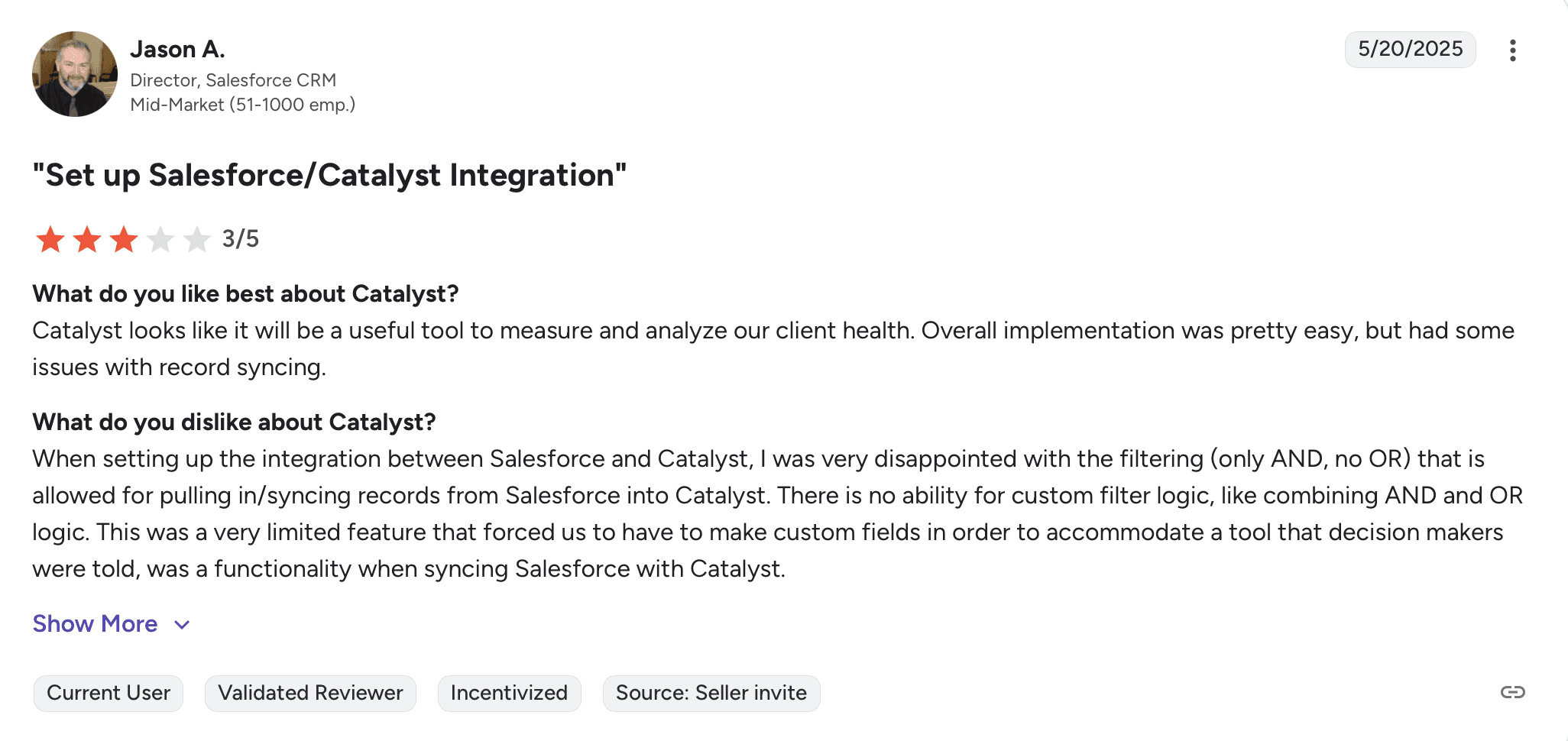
Limited automation vs. ChurnZero's best-in-class playbooks
Smaller feature set overall
Newer platform means less mature integrations
Product still evolving—pricing and features in flux
Best Suited For
Mid-market teams with high-touch models where relationship mapping matters more than automated workflow orchestration.
Pricing
On request
Implementation Time
2-4 weeks
8. Pylon

Pylon takes a completely different approach from ChurnZero—Slack-native support vs. comprehensive automation platform. Where ChurnZero builds complex journeys, Pylon keeps everything in Slack. Best for teams realizing they need conversation management, not ChurnZero's journey orchestration.
What Makes Pylon Unique
Slack-Native: Everything happens in Slack vs. ChurnZero's separate platform.
1-3 Week Setup: Fastest implementation vs. ChurnZero's 3 months.
Modern UI: Clean, intuitive interface vs. ChurnZero's functional design.
Support-First: Built for conversation management vs. ChurnZero's automation focus.
How it Compares to HQ1
Pylon manages Slack conversations; HQ1 understands conversations AND product usage AND sentiment to deliver revenue intelligence. Pylon helps respond faster; HQ1 helps drive retention and expansion. Different primary functions.
Drawbacks
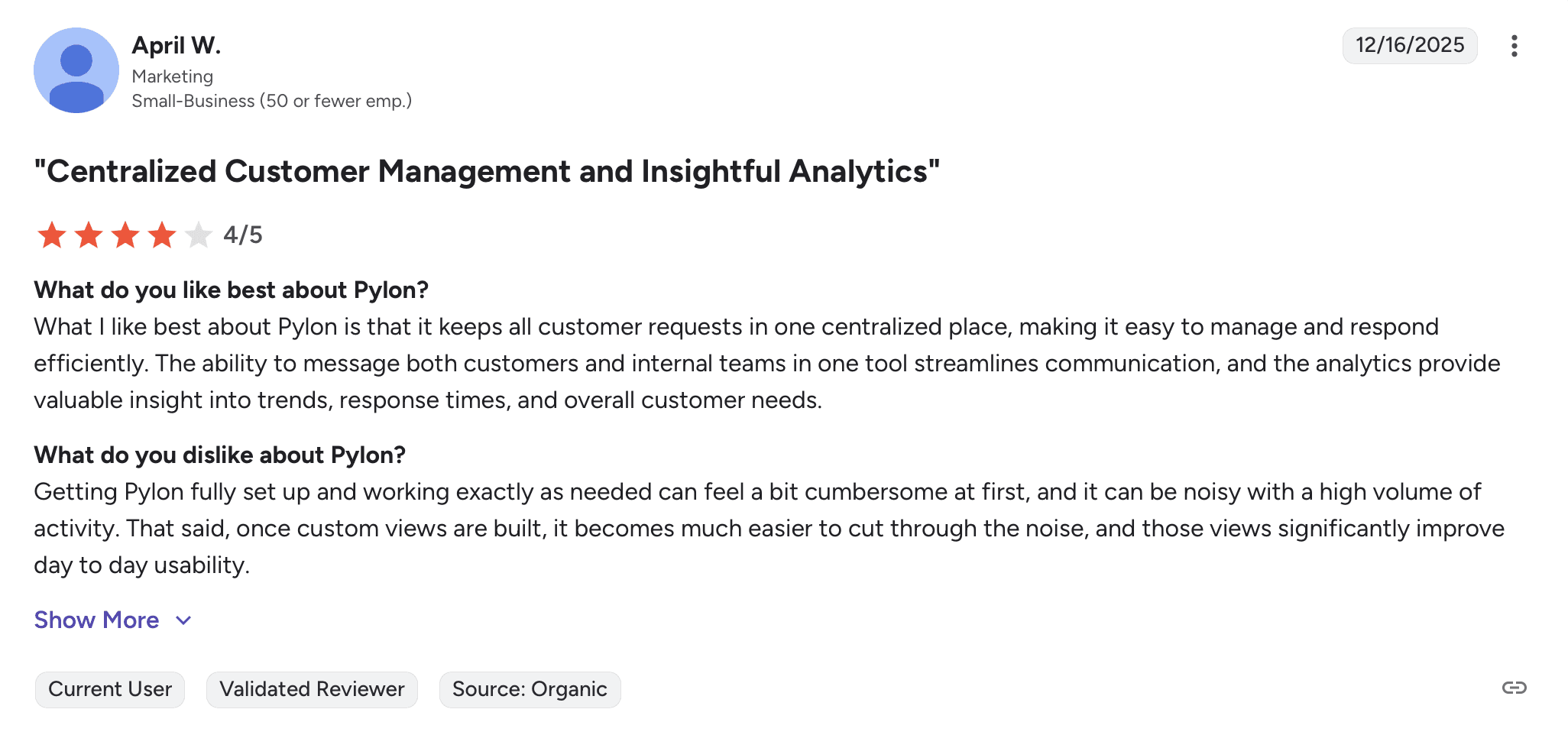
No journey orchestration vs. ChurnZero's powerful playbooks
Shallow customer intelligence
Support-first foundation—limited CS automation
Pricing model changes frequently
Best Suited For
Small to mid-market teams realizing they need Slack-based support tools, not comprehensive automation platform ChurnZero provides.
Pricing
~$100/seat/month + AI add-ons
Implementation Time
1-3 weeks
9. ClientSuccess
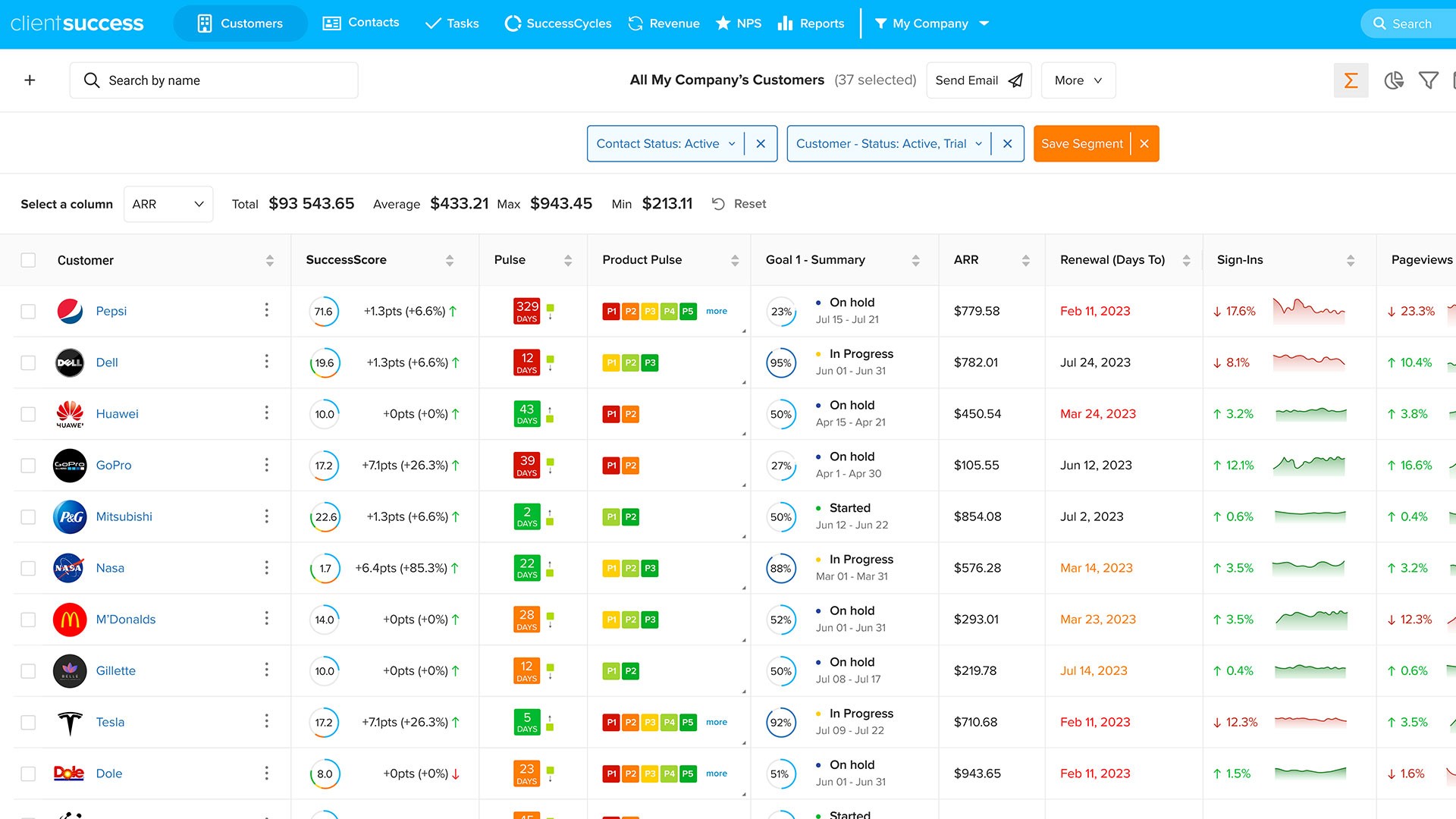
ClientSuccess offers basics at fraction of ChurnZero's cost. Where ChurnZero provides sophisticated automation, ClientSuccess provides simple workflows. Best for small teams that find ChurnZero's capabilities (and pricing) excessive for their needs.
What Makes ClientSuccess Unique
Affordable: $8k-$34k annually vs. ChurnZero's $28k-$75k+ range.
Simple: Core CS functionality without ChurnZero's playbook complexity.
Quick Setup: 2-4 weeks vs. ChurnZero's 3-month implementation.
Email Sync: Basic communication tracking vs. ChurnZero's extensive engagement tools.
How it Compares to HQ1
ClientSuccess offers basics affordably; HQ1 delivers AI intelligence ClientSuccess can't match. ClientSuccess is a coordinator; HQ1 is an analyst. Choose ClientSuccess only if budget is paramount and you have very simple needs.
Drawbacks
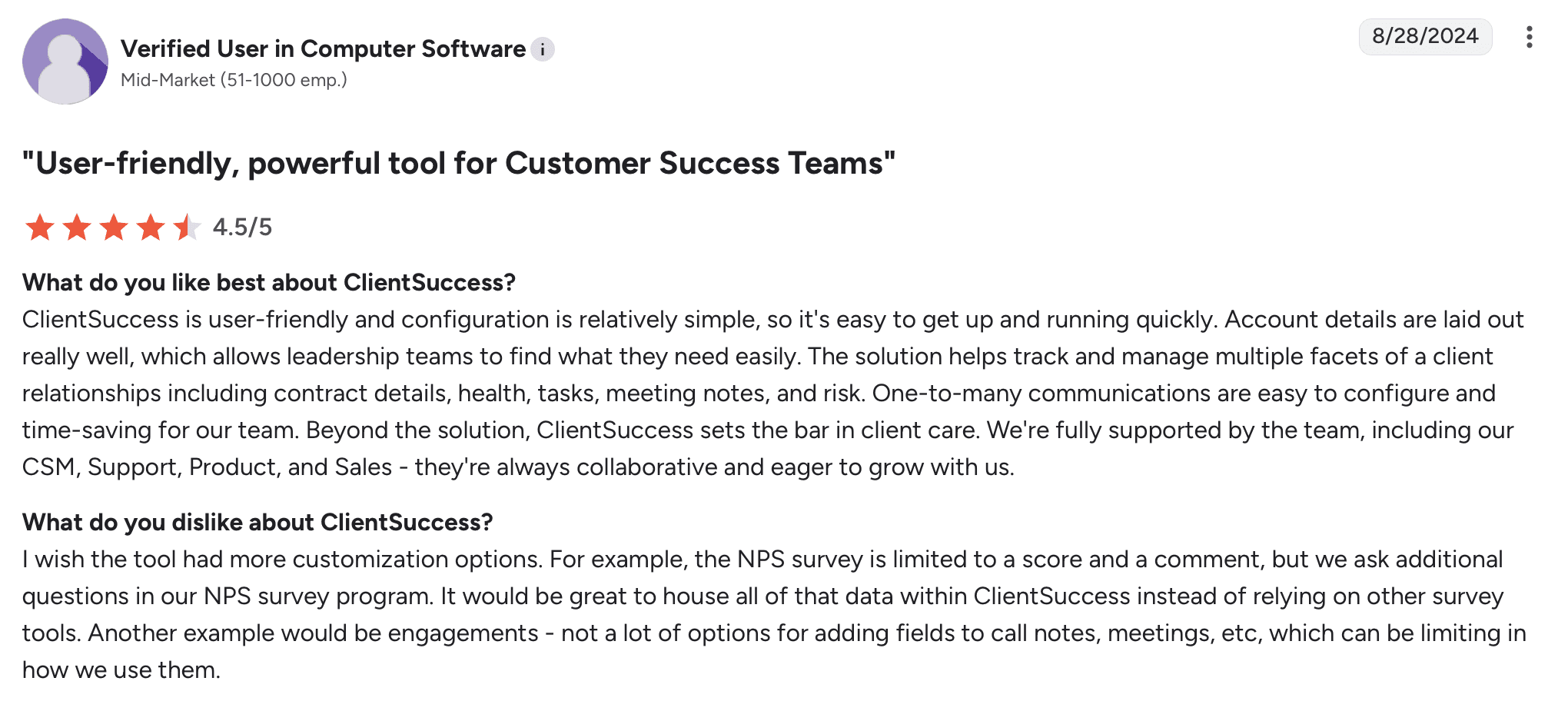
No meaningful automation vs. ChurnZero's playbooks
Limited integrations
Doesn't scale beyond small teams
Missing features mid-market companies expect
Best Suited For
Small teams (<10 CSMs, <100 customers) with simple needs finding ChurnZero's automation capabilities and pricing excessive.
Pricing
$8k–$34k/year
Implementation Time
2-4 weeks
10. Freshworks Customer Success (formerly Freshsuccess)
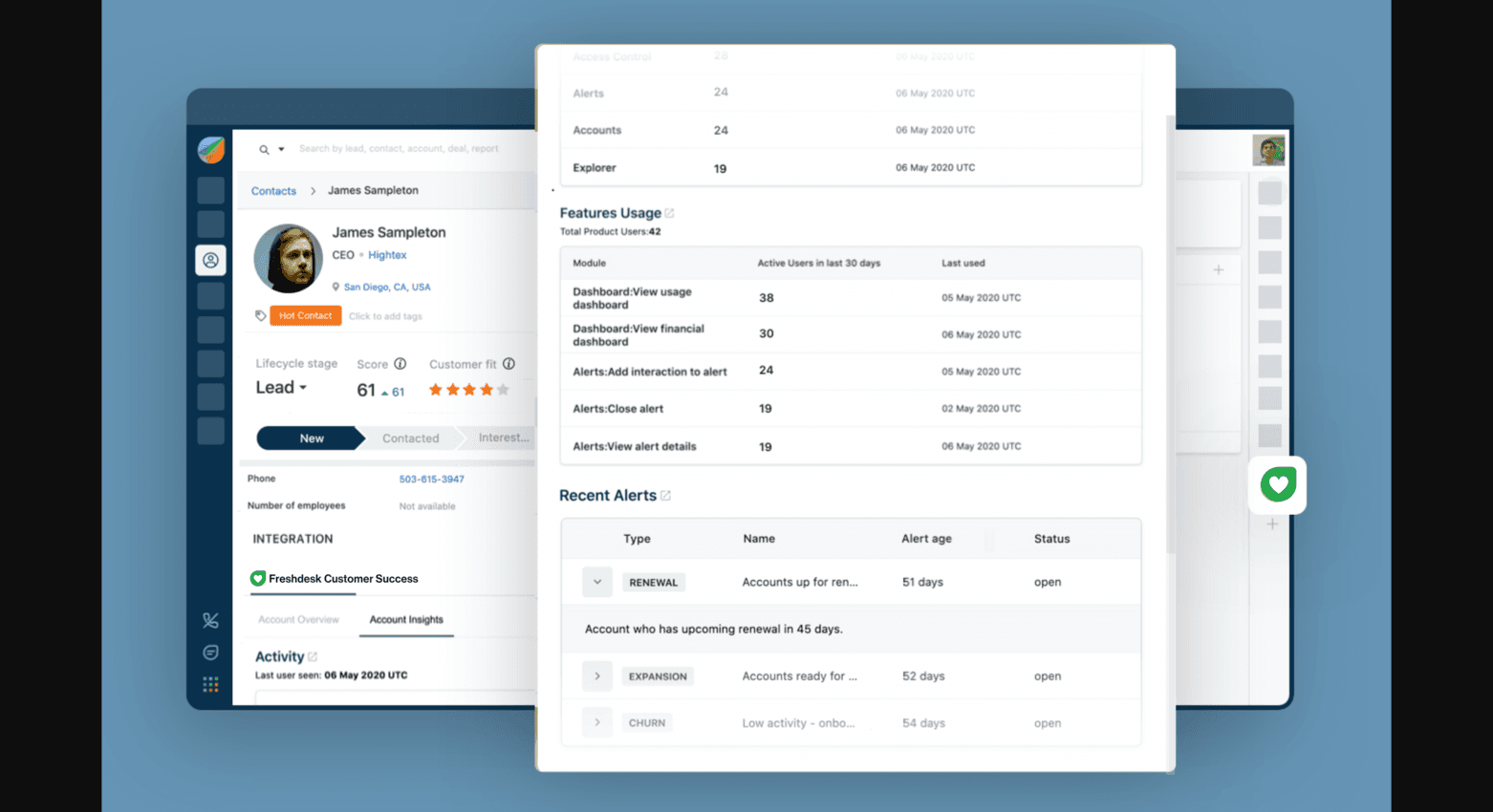
Freshworks offers ChurnZero-like automation as part of broader Freshworks ecosystem. Where ChurnZero is standalone platform, Freshsuccess integrates with Freshdesk, Freshsales. Best for teams invested in Freshworks wanting unified platform vs. ChurnZero's best-of-breed approach.
What Makes Freshworks Unique
Freshworks Ecosystem: Native integration with Freshdesk, Freshsales vs. ChurnZero's connectors.
Unified Platform: Support, Sales, CS in one ecosystem vs. separate tools.
Similar Automation: Playbook capabilities comparable to ChurnZero's.
Competitive Pricing: Often bundled favorably for Freshworks customers.
How it Compares to HQ1
Freshworks unifies CS with existing Freshworks stack; HQ1 delivers AI-powered revenue intelligence across any stack. Freshworks is for Freshworks-centric teams; HQ1 is for intelligence-driven CS regardless of ecosystem.
Drawbacks
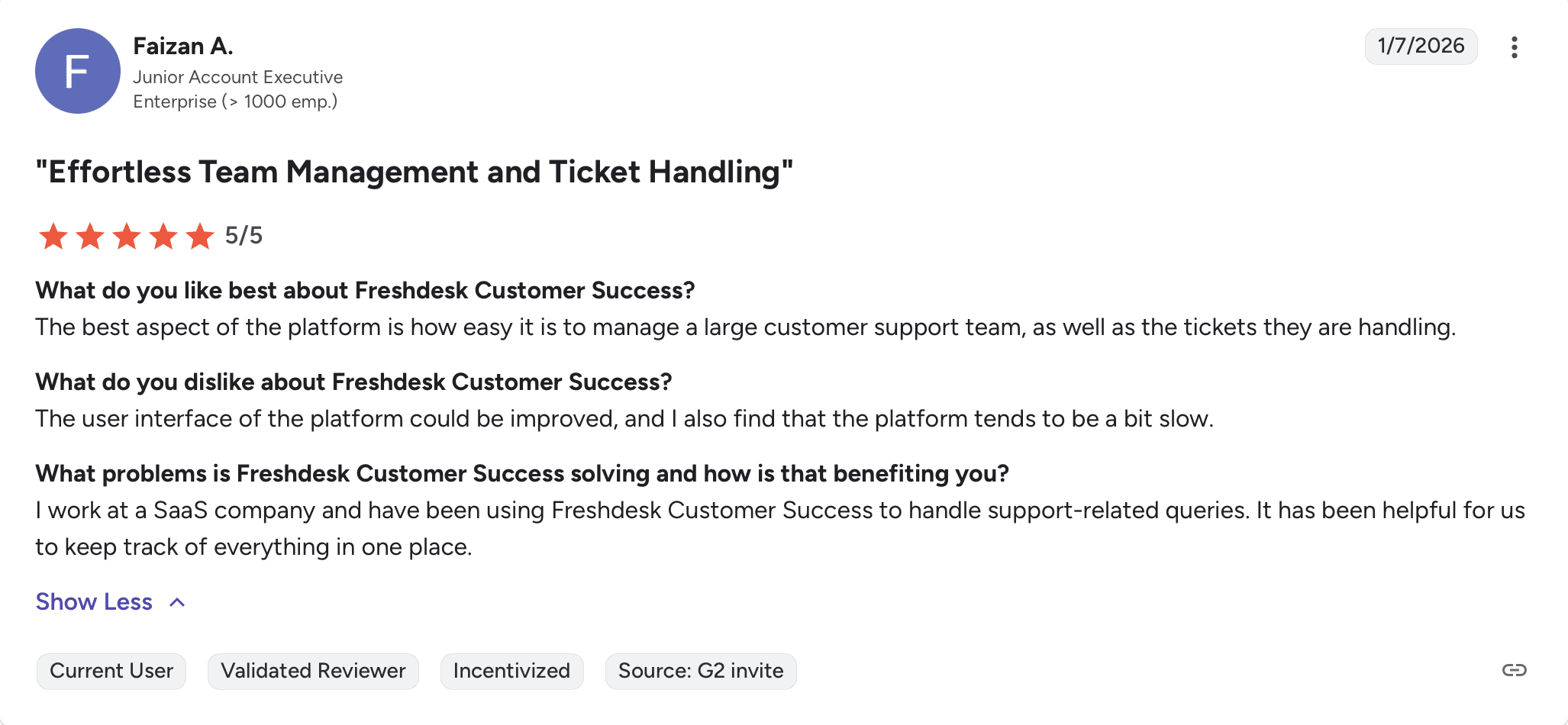
Requires Freshworks investment—not standalone like ChurnZero
Automation less mature than ChurnZero's refined playbooks
Smaller CS-specific community
Feature development slower than ChurnZero's focused approach
Best Suited For
Teams heavily invested in Freshworks wanting CS capabilities without adopting separate platform like ChurnZero.
Pricing
Bundled with Freshworks pricing
Implementation Time
4-6 weeks
Making the Right Choice
ChurnZero excels when you know exactly what workflows to automate and want the best builder to create them. But most teams don't know all the scenarios they should automate—they need platforms that discover opportunities automatically and act on them.
Choose HQ1 if you:
Want AI to detect opportunities vs. manually building playbooks for every scenario
Need automatic CRM enrichment from conversations, not just manual data entry
Want 4-10 day implementation vs. 3-month playbook configuration
Need intelligence that adapts vs. static rules that require constant updating
Want to avoid ChurnZero's pricing escalation as you add modules
Choose another platform if:
You love manual playbook building and know all workflows → Stay with ChurnZero
You need enterprise scale beyond ChurnZero → Gainsight
You're Salesforce-centric → Totango
You're PLG with product usage focus → Vitally
You need basics affordably → ClientSuccess
You're Freshworks-committed → Freshsuccess
The fundamental question isn't "which platform has the best playbook builder?"It's "do you want to build playbooks for every scenario or have AI detect opportunities automatically?"
ChurnZero gives you the best tools to automate what you already know. HQ1 tells you what you should know and automates it for you. The platforms replacing ChurnZero aren't trying to build better manual workflow tools—they're trying to eliminate the need for manual workflow building by delivering AI that discovers and acts on opportunities automatically.
The hidden cost of manual automation: Months building playbooks, constant updating as business changes, opportunities missed because you didn't think to build that specific trigger, pricing that escalates as needs grow. Ask yourself if you want to spend time building workflows or time driving revenue.
Related Articles & Fresh Insights
Keep exploring new perspectives, in-depth guides, and expert opinions, carefully curated to help you stay informed, inspired, and confident in every real estate decision.


Close more. Churn less. Grow continuously.
Unlock AI-driven enablement for your Sales and Customer Success teams — drive conversions, boost retention, and scale faster with HQ1.
